An electrical panel is often in a garage, basement, utility room, hallway, or outside. It must have enough working space, safe access, and equipment suited to the environment.
Electrical panels cannot be installed in some locations. These include dwelling-unit bathrooms, near easily ignitable materials like clothes, or over stairway steps.
There is no single place where every electrical panel must go. A room may be acceptable, while a specific spot in that room may not be.
Quick Takeaways
• Electrical panels can be installed in many areas of a home.
• Garages, basements, utility rooms, and hallways are common locations.
• Electrical panels can also be installed outside with the right equipment.
• Panels need enough open space for safe access and electrical work.
• Electrical panels cannot be installed in dwelling-unit bathrooms.
• Breaker panels should not be installed near easily ignitable materials, such as clothes in a clothes closet.
• Circuit breakers cannot be located over stairway steps.
• Remodeling can make an existing panel location unsuitable.
Where Can an Electrical Panel Be Located?
An electrical panel can be installed in many parts of a home. The location needs enough working space, easy access, and protection from water or physical damage.
Common locations include garages, basements, utility rooms, hallways, and exterior walls.
A good panel location should have:
- Enough working space
- Easy access to the breakers
- Protection from water and physical damage
- No restrictions that prohibit a panel in that location
The specific spot matters just as much as the room. A garage may be fine, for example, but not if shelving or other equipment blocks access to the panel.
What Are the Electrical Panel Location Requirements?
in 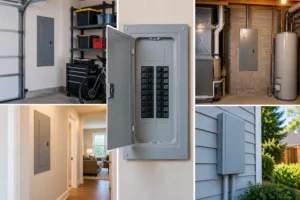 An electrical panel needs clear space around it so an electrician can safely access and service it. The breakers also need to be easy to reach.
For most home electrical panels, the working space generally needs:
- At least 36 inches of clear space in front
- At least 30 inches of width, or the width of the equipment if it is wider
- At least 6 feet 6 inches of height, or the height of the equipment if it is taller
- Enough room for the panel door to open at least 90 degrees
The space in front of the panel should stay clear. Boxes, furniture, cabinets, appliances, and other objects should not block access.
Does the 30-Inch Clearance Have to Be on Each Side of the Panel?
No. You do not need 30 inches of empty space on each side of an electrical panel.
The required working space is usually at least 30 inches wide. It can also be the width of the electrical equipment, whichever is greater. The panel does not have to sit in the exact center of that space.
Where Can an Electrical Panel Not Be Located?
Electrical panels cannot be installed everywhere. Some locations are prohibited because of fire risk, access, or safety concerns.
Breaker panels cannot be installed in dwelling-unit bathrooms, near easily ignitable materials like clothes, or over stairway steps. A location can also be unsuitable if there is not enough room to safely reach and work on the panel.
Can an Electrical Panel Be in a Bathroom?
No. A breaker panel cannot be installed in a bathroom in a dwelling unit.
Some older homes may already have electrical equipment in a bathroom. That does not mean the same location would be allowed for a new panel today.
Can an Electrical Panel Be in a Clothes Closet?
No. Do not install a breaker panel near easily ignited materials. This includes clothes stored in a closet.
The problem is the clothing and other combustible materials around the electrical equipment. This is why a clothes closet and a dedicated utility closet are not the same thing.
Can an Electrical Panel Be in a Utility Closet?
Yes, a utility closet may be a suitable location for an electrical panel. The closet still needs enough working space and easy access to the breakers.
Other equipment can create problems. A water heater, furnace, shelving, or stored belongings should not block the required working area.
Can an Electrical Panel Be Above Stairs?
Circuit breakers cannot be located over the steps of a stairway.
A stairway landing is different from the steps themselves. A panel near a landing may be possible if there is enough working space and safe access.
Can an Electrical Panel Be in a Garage?
Yes. A garage is one of the most common places for an electrical panel.
Garages often have open wall space and easy routes for electrical wiring. The main concern is keeping the panel accessible.
Shelving, boxes, tools, and other stored items should not fill the working space in front of the panel. The electrical equipment may also need protection if vehicles or other objects could hit it.
Can an Electrical Panel Be in a Basement?
Yes. A basement can be a good location for an electrical panel if the area is dry and easy to access.
Water is one of the biggest concerns. Leaks, flooding, and damp conditions can make some basement locations poor choices for electrical equipment.
Storage can also become a problem. Boxes, shelving, and furniture should not block the panel.
For Houston-area homes, possible flooding and water exposure should be considered when choosing a panel location.
Can an Electrical Panel Be in a Laundry Room?
Yes, an electrical panel can sometimes be installed in a laundry room. The panel still needs enough working space and easy access.
A washing machine does not automatically make a laundry room unsuitable. The bigger question is where the panel is located.
Washers, dryers, cabinets, and shelving should not block access or take up the required working space.
Can an Electrical Panel Be in a Bedroom?
Yes, an electrical panel can sometimes be installed in a bedroom. A bedroom itself is not automatically a prohibited location.
The panel still needs enough working space and easy access.
A bedroom wall is also different from a clothes closet. A breaker panel should not be installed near easily ignitable materials like hanging clothes.
Can an Electrical Panel Be Outside?
Yes. Electrical panels can be installed outside when the equipment is made for outdoor use.
An outdoor panel needs protection from the conditions around it. The location should account for:
- Rain and moisture
- Drainage
- Corrosion
- Physical damage
- Working space
- Easy access
Houston gets heavy rain, so drainage and possible flooding also matter when choosing an outdoor panel location.
Can an Electrical Panel Be Behind a Door?
An electrical panel can sometimes be behind a door. The door cannot block access to the panel or interfere with the required working space.
The panel door also needs enough room to open properly.
The goal is simple. Someone should be able to reach the breakers and work on the panel without another door getting in the way.
Can You Put Furniture or Cabinets in Front of an Electrical Panel?
No. The working space in front of an electrical panel needs to stay clear.
Common problems include:
- Cabinets
- Shelving
- Refrigerators
- Washers and dryers
- Workbenches
- Boxes
- Large furniture
You do not need 30 inches of empty wall on each side of the panel. The important space is the working area in front of the electrical equipment.
How High Can an Electrical Panel Be Mounted?
The circuit breakers need to be low enough for someone to reach them. In most homes, the center of the highest breaker handle cannot be more than 6 feet 7 inches above the floor or working platform.
There is not one required height for the bottom of every electrical panel.
The rule applies to the breaker handle. The size and layout of the panel can affect how high the enclosure is mounted.
Does an Electrical Panel Have to Be Near the Meter?
No. The electrical panel does not always have to be right next to the electric meter.
The meter and electrical panel have different jobs. Some homes also have a separate service disconnect.
The best panel location depends on how the electrical service is set up, where the wiring runs, and local requirements.
What Makes One Panel Location Better Than Another?
A good electrical panel location is easy to reach, dry, protected from damage, and unlikely to become blocked. It should also provide enough room for an electrician to work safely.
The best location is not always the place where the panel is hardest to see. Hiding a panel behind appliances, cabinets, or storage can create bigger problems later.
What If Your Electrical Panel Is Already in a Bad Location?
An electrical panel in an unusual location does not automatically mean something is wrong. Older homes may have panels installed under different rules.
However, an old installation does not mean the same location would be approved for a new panel today.
An electrician can check the panel’s location, working space, access, and condition.
If the location no longer works for your home, moving the panel may be an option.
Should You Move an Electrical Panel During a Remodel?
Moving an electrical panel can make sense if a remodel will block the existing panel or change how the space is used.
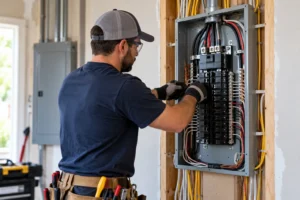 Panel relocation may come up when:
- Adding new cabinets
- Converting a garage
- Adding a bathroom
- Moving or removing walls
- Building a room addition
- Finishing a basement
- Remodeling a utility room
Think about the electrical panel early in the remodel. It is much easier to plan a good location before new walls, cabinets, and appliances are installed.
How Do You Choose the Best Electrical Panel Location?
Choose a location that is easy to reach, has enough working space, and protects the panel from water and damage.
Before choosing a location, ask:
- Is the panel easy to reach?
- Is there enough space in front of it?
- Can the panel door open properly?
- Are clothes or other easily ignitable materials nearby?
- Is the panel protected from water and physical damage?
- Are the breakers easy to reach?
- Could cabinets, appliances, or storage block the panel later?
- Does the location make sense for the home’s wiring?
- Does the location meet local electrical requirements?
An electrician can check a proposed location before walls, cabinets, or other parts of a remodel are built around it.
FAQs About Electrical Panel Locations
Where Is the Best Place to Put an Electrical Panel?
A garage, utility room, basement, or another dry and accessible area can be a good place for an electrical panel. The best location has enough working space, protects the equipment, and is easy to reach.
Can an Electrical Panel Be in a Garage?
Yes. A garage is a common location for an electrical panel. Storage, shelving, vehicles, and other objects should not block access or the required working space.
Can an Electrical Panel Be in a Bedroom?
Yes, potentially. A bedroom is not automatically a prohibited location. The panel still needs enough working space and easy access.
Can an Electrical Panel Be in a Bedroom Closet?
A breaker panel should not be installed in a clothes closet where the breakers are near easily ignitable materials like clothing.
Can an Electrical Panel Be in a Utility Closet?
Yes, potentially. A utility closet may work if there is enough space to access and service the panel safely.
Can an Electrical Panel Be in a Laundry Room?
Yes, potentially. The washer, dryer, cabinets, and other equipment cannot block access or the required working space.
Can an Electrical Panel Be Outside?
Yes. Electrical panels can be installed outside when the equipment is made for outdoor conditions and the location meets electrical requirements.
Can an Electrical Panel Be Behind a Door?
Yes, potentially. The door cannot block the panel, interfere with its operation, or make the required working space unusable.
Can an Electrical Panel Be Covered by a Picture or Cabinet?
Do not cover an electrical panel in a way that makes the breakers hard to reach or blocks the required working space. Permanent cabinets should not interfere with access or servicing.
How Much Clearance Does an Electrical Panel Need?
Most home electrical panels need at least 36 inches of working space in front. The working space generally needs to be at least 30 inches wide or the width of the equipment, whichever is greater.
Does an Electrical Panel Have to Be Inside the House?
No. An electrical panel can be outside if the equipment is made for outdoor conditions and the installation meets applicable requirements.
Can You Move an Electrical Panel to a Better Location?
Yes. An electrical panel can often be moved if its current location no longer works. Moving a panel may require rerouting wiring, changing parts of the electrical service, permits, inspections, or utility coordination.
Need Help Choosing an Electrical Panel Location in Houston?
 Right Touch Electrical can help you choose a safe and practical location for a new, replacement, or relocated electrical panel.
We provide electrical panel services throughout Houston, Pasadena, and surrounding areas. We can check the available space, wiring, electrical service, and proposed panel location before work begins.
Whether you’re replacing an old panel, remodeling your home, or moving a panel to a better location, Right Touch Electrical can help you find the right setup for your home. It’s another way we bring quality with a master’s touch to electrical work throughout the Houston area.