A circuit breaker stops a surge of electricity when it sees trouble. It protects you from electrical fires and damaged wiring. When the same appliance keeps tripping the breaker, your electrical system is warning you that something is wrong.
These trips may point to an overloaded circuit, a short circuit, a ground fault, or a faulty appliance.
This guide explains the most common causes, the signs you should watch for, the steps you can take, and when a licensed electrician needs to handle the electrical repairs.
Quick Takeaways
• If the same breaker trips every time you use one appliance, stop using it and have both the appliance and circuit checked.
• Warm breaker panels, burning smells, or visible damage are warning signs that call for a licensed electrician right away.
• Older homes and crowded circuits make power-hungry appliances more likely to cause power outages and breaker trips.
• Repeated breaker trips are not “normal” and can increase the risk of electrical fires if you ignore them.
Common Reasons an Appliance Keeps Tripping the Circuit Breaker
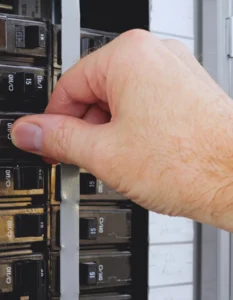 You flip the breaker, try the appliance again, and the breaker continues to trip.
Here are the most likely reasons this happens.
1. The Circuit Is Overloaded by the Appliance
The appliance is pulling more current than the circuit can handle. A space heater, portable AC, microwave, hair dryer, or window unit may overload a small circuit.
Signs include dimming lights, warm cords, or other devices cutting out. An overloaded circuit forces the breaker to trip before the wiring overheats.
2. The Appliance Has an Internal Short
A short circuit occurs when a hot wire touches a neutral wire or another surface that should not carry current. Damaged motors, bad windings, or internal wiring faults create instant overload.
When you plug in the appliance and the breaker trips right away, the device may have a short. This type of failure often comes with burning smells or scorch marks.
3. The Circuit Wiring Has a Fault
Loose connections or exposed wires in outlets, switches, or junction boxes can cause a breaker to trip when an appliance runs. This fault may show up as buzzing outlets, flickering lights, or warm plates and covers.
The appliance only exposes the weakness. The deeper problem is the wiring.
4. Ground Faults Triggering GFCI or Breaker Trips
A ground fault occurs when a hot wire comes into contact with a grounded surface. Moisture, damaged cords, or metal surfaces can create this fault. A GFCI outlet reacts to this and cuts power fast.
Kitchens, bathrooms, garages, and outdoor areas often use GFCI protection. When a GFCI trips, it may look like a tripping circuit breaker even though the source is the ground fault itself.
5. The Appliance Shares a Circuit With Too Many Other Loads
Shared circuits strain easily in older homes. One circuit may power several outlets and rooms. When you add a high-demand appliance to that mix, the breaker trips.
These “mystery circuits” show up the moment the load rises. The long-term fix may be a dedicated circuit for the appliance.
6. A Weak or Failing Breaker in the Electrical Panel
Breakers wear down over time. A weak breaker may trip under normal load or feel loose in the breaker box. You may hear a faint buzz or see discoloration near the breaker.
Only a licensed electrician should replace breakers or work inside the electrical panel. A failing breaker hides real hazards because it no longer protects the circuit the way it should.
7. Wrong-Sized Circuit for the Appliance
Some appliances need a 20-amp circuit or a 240-volt circuit. If you run them on a small general-purpose circuit, the breaker will continue to trip.
This issue shows up in kitchens, laundry rooms, and garages. The appliance works, but the circuit does not support it.
8. Old or Damaged Appliance That Needs Replacement
An appliance can look fine but still be unsafe. Age breaks down insulation and wiring. Moving parts wear out. Heat builds inside the device.
Signs include burning smells, rattling, visible cord damage, or scorch marks at the plug. The appliance may “work” for a few seconds before it forces the breaker to trip.
How to Safely Troubleshoot an Appliance That Trips the Breaker
You can check a few basic things before you call an electrician, but safety stays first.
Step 1: Unplug the Appliance and Inspect the Cord and Plug
Look for cuts, fraying, melted spots, or scorch marks. If you see damage, stop using the device.
Step 2: Try the Appliance on a Different Outlet and Circuit
Use an outlet on a different, lightly loaded circuit. If it trips that breaker too, you likely have a faulty appliance.
Step 3: Reduce the Load on the Circuit
Unplug everything else on the circuit and test the appliance alone. If it works, the problem may be an overloaded circuit.
Step 4: Test and Reset Any GFCI Outlets
Press TEST and RESET on nearby GFCI outlets. A GFCI trip can look like a breaker trip.
Step 5: Check the Breaker’s Condition
Open the panel door and look at the labels. Note any heat, buzzing, or visible damage. Do not remove the panel cover.
Step 6: Stop Troubleshooting if Anything Seems Unsafe
If you smell burning, feel heat at the breaker, or see repeated trips, stop and call a licensed electrician.
When You Should Call an Electrician Right Away
 Some signs mean you should stop resetting the breaker and bring in a professional.
These signs include:
- Breaker trips as soon as the appliance runs
- Breaker keeps tripping several times a day
- Scorch marks, melted insulation, or exposed wiring
- Hot or buzzing outlets
- Burning smells or “hot plastic” odors
- Lights dim or flicker when the appliance runs
- Older wiring or an outdated electrical panel
Ignoring these signs increases the risk of electrical fires.
How Right Touch Electrical Troubleshoots Appliances That Trip Breakers
Full Circuit and Panel Evaluation
We inspect the breaker box, the appliance circuit, and breaker sizing. We check for loose connections, overloaded circuits, and panel damage.
Appliance and Load Testing
We measure how much power the appliance pulls. We check start-up current, running current, and other connected loads.
Wiring and Safety Checks
We inspect outlets, junction boxes, and visible wiring. We check GFCI and AFCI protection.
Long-Term Fixes, Not Just Resetting the Breaker
We add or reroute circuits when needed. We replace failing breakers, upgrade panels, or recommend appliance replacement when the device is unsafe.
FAQs: Appliance Keeps Tripping the Circuit Breaker
Why does my appliance keep tripping the circuit breaker?
Overloads, internal shorts, or ground faults force the breaker to trip.
Is it safe to keep resetting a tripped circuit breaker?
No. Constant resets hide fire risks and damage.
How do I tell if the appliance is the problem or the wiring?
Test the appliance on another circuit. If it still trips the breaker, the device is likely faulty.
Can a bad outlet make my appliance trip the breaker?
Yes. Damaged or loose outlets can create shorts.
Do I need a dedicated circuit for large appliances?
Yes for microwaves, window AC units, space heaters, and laundry equipment.
When should I call an electrician instead of fixing this myself?
Call when you see burning smells, older wiring, repeated trips, or visible damage.
Call Right Touch Electrical for Safe, Expert Electrical Troubleshooting in Houston
 An appliance that keeps tripping a breaker is more than a small problem. It points to a real issue in the circuit, the wiring, the breaker, or the appliance. We can diagnose the cause and make safe, lasting repairs.
Appliance keeps tripping your circuit breaker in Houston? Schedule professional electrical troubleshooting with Right Touch Electrical today—where every repair is handled with quality with a master’s touch.