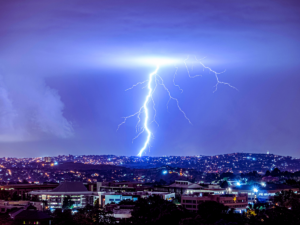
 In 2024, Teague, Texas, was named the lightning capital of the United States. That headline grabbed attention, but it also raised questions for Houston residents. If lightning is so intense elsewhere in Texas, how does Houston compare?
The answer matters for homeowners and businesses that deal with storm damage, power reliability, and insurance claims. This article breaks down how Houston stacks up against the rest of Texas when it comes to lightning strikes.
Lightning in Texas: The Big Picture
Texas leads the nation in lightning activity. In 2024, the state recorded about 40 million lightning events. That total includes both cloud-to-ground strikes and in-cloud flashes.
While Texas has the most lightning events, it does not always rank first in strike density. Density measures the number of strikes per square mile.
Smaller regions with frequent thunderstorms often record higher densities than large states. For example, Teague saw about 1,900 strikes per square mile in 2024, while Walker County recorded around 825 strikes per square mile.
Lightning is also seasonal. Spring and summer storms bring the highest activity, driven by Gulf moisture and unstable air masses. East Texas and the Gulf Coast, including Houston, consistently see more lightning than West Texas or the Panhandle.
Houston’s Lightning Profile
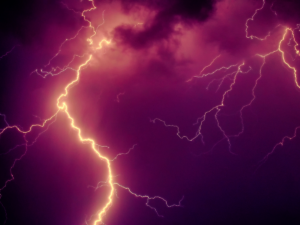 Houston sits in a high-risk zone. Its location near the Gulf of Mexico brings warm, moist air that fuels thunderstorms. The city’s size and urban heat island effect may further increase storm intensity. Flat terrain and frequent sea breeze interactions add to the mix.
The Houston Lightning Mapping Array (HLMA), run by Texas A&M, provides detailed data on lightning flashes in the region. During Tropical Storm Harvey, the network detected nearly 300,000 strikes over just 48 hours. That example highlights the level of activity Houston can experience during extreme weather.
Annual lightning density data specific to Houston is not as widely published as for some smaller Texas counties. Even without a precise figure, it is clear from HLMA observations and storm history that Houston faces high lightning exposure year after year.
Comparing Houston to the Rest of Texas
Houston may not claim the title of “lightning capital,” but it is one of the most storm-active metros in Texas. Its size and frequency of severe weather make lightning a consistent concern.
Why Houston Differs
Houston’s lightning activity is shaped by several factors:
- Gulf Coast storms: Moisture and instability fuel frequent thunderstorms.
- Urban heat island: The city generates heat that can intensify storms.
- Flat terrain: Unlike the Hill Country, Houston lacks topographic barriers to storm development.
- Detection coverage: HLMA ensures more lightning is recorded near Houston compared to areas without dense sensor networks.
What This Means for Houston Residents
Living in Houston means greater exposure to lightning than many parts of Texas. Power grids, transformers, and grounding systems face repeated stress. For homeowners, this translates to risks of surge damage, fried electronics, and potential insurance claims after major storms.
Protecting Your Home or Business in Houston
 Steps to reduce lightning risk include:
- Scheduling a professional lightning strike evaluation after major storms.
- Installing whole-home surge protection.
- Upgrading grounding and bonding systems to current code.
Lightning strike evaluations also help document damage for insurance claims, making the process faster and smoother. The smartest move is to call a licensed Houston electrician who understands local risks.
Final Thoughts
Texas is the lightning giant of the United States, and Houston sits at the center of its storm belt. While the city does not top the density charts like Teague or Walker County, it faces repeated exposure from Gulf-driven storms.
The takeaway is simple: Houston homeowners and businesses cannot afford to ignore lightning. Regular evaluations and protective measures save money, protect property, and reduce stress when storms hit.