Houston weather doesn’t play fair. One day it’s blazing hot. The next, it’s pouring rain or pushing hurricane winds. Every system in your home works harder here — and your generator is no exception.
Generators are built to keep you powered when the grid goes down, but Houston’s climate can wear them down faster if you’re not ready. Here’s how local weather affects generator performance — and what you can do to stay ahead of it.
Quick Takeaways
- High humidity can corrode generator components over time.
- Heavy rain and flooding can damage outdoor units and fuel systems.
- Extreme heat affects generator cooling efficiency and output.
- Hurricane winds and debris can block ventilation or damage housings.
- Regular maintenance before and after storms prevents failure when you need power most.
1. Houston’s Climate Puts Generators to the Test
Houston’s subtropical climate is tough on machines. The city gets long stretches of heat, dense humidity, and a hurricane season that keeps everyone on edge.
For generators, that means non-stop exposure. Portable units deal with sudden weather swings and storage humidity. Standby units face corrosion, flooding, and heat strain.
Choosing the right installation spot makes all the difference — somewhere dry, elevated, and ventilated. A good location and weatherproof setup keep your generator ready year-round.
2. The Effects of Humidity on Generator Performance
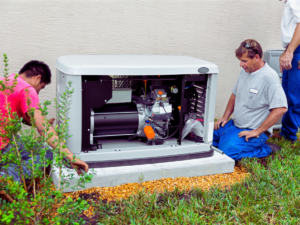 Humidity is silent, but it’s brutal on metal. Moisture creeps into electrical connections, corrodes terminals, and builds condensation inside the housing.
Over time, that corrosion slows startup and can cause short circuits. A few preventive habits help: regular visual inspections, weatherproof coatings, and dehumidifying covers or shelters.
When in doubt, let a professional open it up and check for internal corrosion. That simple check can save you thousands later.
3. Flooding and Heavy Rain Risks
Flooding is a fact of life in Houston. Even small storms can create standing water where generators sit.
If your generator isn’t raised on a solid pad, water can short out connections or damage the fuel system. Gas lines can also shift or clog during heavy rain.
Keep the installation site slightly elevated with good drainage. After major storms, check that the ground slopes away from your generator and that your fuel lines look dry and intact.
4. How Heat and Sun Exposure Affect Generator Output
When Houston hits 100°F, your generator feels it too. Engines run hotter, cooling systems strain, and batteries wear down faster. Oil can thin out in extreme heat, reducing protection for moving parts.
Shade and ventilation are your best defenses. A canopy, shade structure, or positioning near a north-facing wall can reduce surface temperature by 10–15 degrees.
Keep air vents clear and change oil on schedule. A well-ventilated generator lasts longer and runs more efficiently through summer peaks.
5. Hurricanes, Wind, and Debris Hazards
 When a hurricane hits, debris can block vents or crack casings. Wind-driven rain can push water into exhausts or control panels.
Before storm season, clear the area around your generator. Trim branches, remove loose items, and secure the housing. After a major event, inspect everything — especially the air intake and exhaust systems.
Never restart a generator that’s been exposed to floodwater until it’s been checked by a professional.
Seasonal Maintenance for Reliable Power
Weather doesn’t stop, and neither should your maintenance. Check your oil, battery, and air filters monthly. Run your generator for ten minutes every few weeks to keep it in shape.
Schedule professional maintenance twice a year — ideally in spring before hurricane season and again in fall after it. That routine ensures your system stays reliable no matter what Houston throws at it.
FAQs About Generator Performance in Houston Weather
Can humidity really damage my generator?
Yes. Prolonged humidity can corrode metal parts and electrical contacts, leading to performance issues or total failure.
Should I cover my generator during rain?
Only use an approved enclosure or canopy that allows ventilation. Never cover your generator with plastic or airtight material.
How do I protect my generator during a hurricane?
Turn it off before the storm, secure it in place, and clear debris around it. Inspect for damage before restarting.
Does extreme heat shorten generator lifespan?
Yes. High heat strains cooling systems and batteries, leading to premature wear.
Power Through Houston Weather with Right Touch Electrical
 Houston’s weather changes fast — your power shouldn’t. At Right Touch Electrical, we keep your backup generator ready for anything.
Our licensed electricians provide expert inspections, weatherproof installations, and year-round maintenance — all with quality you can see and a master’s touch you can trust.