Quick Takeaways
- Whole house generators typically use around 100–400 cubic feet of natural gas per hour, depending on the model and electrical load.
- A Generac 22 kW generator uses approximately 221 CFH at half load and 311 CFH at full load.
- Running air conditioning and other large appliances increases natural gas consumption.
- Generator operating costs depend on fuel consumption, runtime, and local natural gas rates.
- Extended power outages can significantly increase a Houston homeowner’s natural gas bill.
- Your home’s gas meter and supply lines must be able to support the generator’s fuel requirements.
How Much Natural Gas Does a Whole House Generator Use Per Hour?
A typical whole-house generator may use about 100 to 400 cubic feet of natural gas per hour.
Use depends on its size, model, and electrical load. Smaller generators use less fuel, while larger units generally consume more. Running central air conditioning and other major appliances increases natural gas consumption.
Generator manufacturers measure natural gas consumption in cubic feet per hour (CFH). For example, a generator rated at 200 CFH uses 200 cubic feet of natural gas for every hour it runs at the specified load.
A generator’s electrical load also matters. A 22 kW generator running a few essential circuits will generally use less gas than the same generator powering an entire home at high demand.
Natural Gas Consumption by Generator Size
Natural gas consumption varies by generator size and model. The table below is intended to compare common residential generator sizes using manufacturer-published fuel consumption specifications.
A 22 kW generator does not have one universal fuel consumption rate. Gas usage can differ between manufacturers and even between models with the same power rating.
How Much Does It Cost to Run a Natural Gas Generator in Houston?
The cost to run a natural gas generator in Houston depends on its hourly gas use and your utility’s gas price.
You can estimate the fuel cost using this formula:
Hourly cost = (Gas consumption in CFH ÷ 1,000) × Gas price per 1,000 cubic feet
For example, suppose a standby generator uses 200 cubic feet of natural gas per hour and the gas rate is $15 per 1,000 cubic feet.
The calculation is:
(200 ÷ 1,000) × $15 = $3 per hour
At that rate, the generator would cost approximately $72 in natural gas to operate for 24 hours.
The $15 rate is an example, not a quoted Houston utility rate. Actual costs depend on your gas provider, rate plan, and fuel consumption.
Generator Running Costs for 24 Hours, 3 Days, and 7 Days
A natural gas generator running continuously will consume more fuel during longer power outages. Using the example of 200 CFH at $15 per 1,000 cubic feet, the estimated costs are:
These estimates assume the generator maintains the same fuel consumption throughout the outage. Actual gas usage will change as household electrical demand rises and falls.
Natural gas bills may list usage in CCF (hundreds of cubic feet) or therms rather than individual cubic feet. Therms measure energy, so converting them to cubic feet depends on the gas’s heating value.
Your utility bill may also include delivery charges, taxes, and other fees.
What Affects How Much Natural Gas a Generator Uses?
Generator size, electrical load, runtime, and equipment efficiency all affect natural gas consumption.
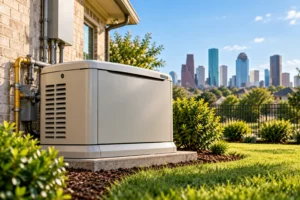 Generator size: A larger standby generator generally burns more fuel than a smaller unit under comparable rated conditions. However, the exact difference depends on the model and how much power the home uses.
Electrical load: Running central air conditioning, electric water heaters, ovens, and other large appliances increases the demand on the generator. In Houston, air conditioning can be one of the biggest electrical loads during a summer outage.
Runtime: A generator that runs for seven days will consume more natural gas than one running for 24 hours at the same average load.
Generator model and efficiency: Different engines and generator designs use different amounts of fuel to produce the same electrical output.
Choosing the correct generator size matters. An undersized generator may not handle the home’s electrical demand. An oversized generator may cost more to purchase and operate than necessary.
Will a Whole House Generator Increase Your Natural Gas Bill?
Yes. A whole house generator increases your natural gas bill whenever it operates. The increase depends on how long the generator runs and how much electricity your home uses.
During a power outage, the standby generator supplies electricity to your home’s selected circuits or entire electrical system. The generator burns natural gas to produce that electricity.
A Houston homeowner running central air conditioning, refrigerators, lights, and other appliances during a summer outage will generally use more fuel than someone powering only essential circuits.
Standby generators also run periodic exercise cycles to check their operation. These cycles use some natural gas, although they are usually much shorter than an extended outage.
For homeowners concerned about long-term operating costs, the biggest factor is how often and how long the generator runs.
Can Your Home’s Natural Gas Supply Handle a Whole House Generator?
Not every home’s existing natural gas supply can support a whole house generator without upgrades. A standby generator needs enough gas pressure and flow to operate correctly, especially when other gas appliances are running.
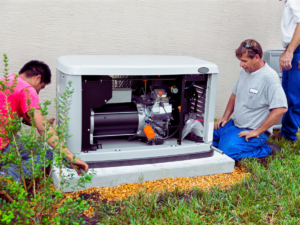 An installer must consider several parts of the home’s gas system:
- Gas meter capacity: The meter must support the combined demand of the generator and other gas appliances.
- Gas line size: The piping must deliver enough fuel to the generator.
- Gas pressure: The generator must receive gas within the manufacturer’s required pressure range.
- Other gas appliances: Furnaces, water heaters, gas dryers, and cooking equipment may share the same fuel supply.
A natural gas generator can require a substantial amount of fuel when running at full load.
Before generator installation, a qualified installer should evaluate the home’s gas service. The natural gas utility may also need to approve or perform changes to the meter or service connection.
FAQs About Whole House Generator Natural Gas Usage
How Much Natural Gas Does a 22kW Generator Use Per Hour?
A 22 kW natural gas generator can use roughly 200 to 300 cubic feet of gas per hour under some operating conditions. Actual consumption depends on the manufacturer, model, and electrical load. Check the generator’s published fuel consumption specifications for accurate half-load and full-load figures.
How Much Natural Gas Does a Generator Use in 24 Hours?
A natural gas generator using 200 cubic feet per hour will consume 4,800 cubic feet in 24 hours. A generator using 150 CFH would consume 3,600 cubic feet over the same period. Actual consumption depends on generator size and electrical demand.
Does a Natural Gas Generator Use More Gas When the AC Is Running?
Yes. Running central air conditioning increases the electrical load on a standby generator. Higher electrical demand generally increases natural gas consumption. Houston homes with multiple air conditioning systems may require a larger generator or a load management system to control demand.
Can a Natural Gas Generator Run Continuously for Several Days?
Yes. Many residential standby generators are designed to provide backup power during extended outages. However, continuous operation depends on the generator’s operating limits, maintenance requirements, and natural gas supply. Follow the manufacturer’s instructions for oil checks, service intervals, and extended operation.
Natural gas service can also be interrupted during certain emergencies.
Is Natural Gas or Propane Cheaper for a Whole House Generator?
Natural gas is often less expensive to operate than propane where utility gas service is available. However, fuel prices, generator efficiency, and local utility rates affect the comparison.
Natural gas comes through utility pipelines, while propane is stored in an onsite tank. Propane may be useful for homes without natural gas service or homeowners who prefer stored fuel.
The best fuel source depends on availability, operating costs, and the home’s backup power needs.
Keep Your Houston Home Powered During an Outage
 A properly sized whole-house generator can keep your air conditioner running during a power outage. It can also keep your refrigerator and lights on. It can power other important equipment too.
Right Touch Electrical provides professional whole home generator installation in Houston, Pasadena, and surrounding areas. Our electricians can help homeowners choose the right generator size, plan for electrical demand, and coordinate the requirements for a safe installation.
Contact Right Touch Electrical to discuss standby generator installation and prepare your home for the next power outage.