Yes, an electrical panel can usually be moved to a new location. However, the new location must meet electrical code requirements for access, working space, and safety. Moving a panel may also require extending or replacing circuits, changing service wiring, obtaining permits, and coordinating with the utility if service equipment is affected.
Moving an electrical panel is more involved than taking the existing breaker box off one wall and mounting it somewhere else. Every circuit connected to the panel must still safely reach the new location.
Quick Takeaways
• Most electrical panels can be moved to a new location.
• The new location must provide proper working space and safe access to the panel.
• Moving a panel may require rerouting, extending, or replacing some electrical wiring.
• Moving the electrical panel does not automatically mean the electric meter needs to move.
• Even moving a panel a few feet can require significant electrical work.
• Remodeling can be a practical time to relocate an electrical panel.
• Electrical panel relocation typically requires a permit and inspection.
• A licensed electrician should evaluate the existing service and proposed panel location before work begins.
Can You Move an Electrical Panel?
Yes. An electrical panel can usually be moved if the new spot has proper access and working clearance. The wiring route must also be safe.
Electrical panel relocation involves more than moving the enclosure and circuit breakers. A licensed electrician may need to disconnect the existing panel, reroute branch circuits, modify feeders or service conductors, address grounding and bonding, and reconnect each circuit at the new location.
The project may also involve electrical permits, inspections, and utility coordination depending on which parts of the electrical service are affected.
Why Would You Move an Electrical Panel?
Electrical panels are commonly moved during remodeling, home additions, electrical upgrades, or when the existing panel interferes with how a space will be used.
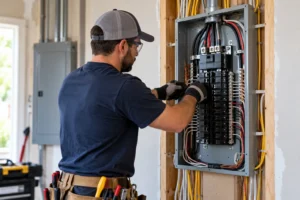 Common reasons for electrical panel relocation include:
- Kitchen or bathroom remodeling
- Building a room addition
- Converting a garage
- Removing or relocating a wall
- Correcting poor panel accessibility
- Creating required working space around the panel
- Making major changes to the electrical service
Relocating an electrical panel only for appearance may be hard to justify. Moving a panel can require major wiring and labor.
Where Can an Electrical Panel Be Moved?
An electrical panel can be moved to a location that provides safe access, required working space, and a suitable environment for electrical equipment. A convenient empty wall is not automatically an acceptable panel location.
Electrical equipment generally needs clear working space in front of the panel. The panel must also stay easy to access, so workers can reach breakers and safely inspect or service the equipment.
For typical residential electrical equipment, working-space requirements commonly involve approximately 30 inches of width, 36 inches of depth, and 6 feet 6 inches of height. The exact requirements for a specific installation should be confirmed under the electrical code adopted by the local jurisdiction.
Electrical Panel Working Clearance
Working clearance gives an electrician enough room to safely access and service the electrical panel. The required space cannot simply be treated as extra storage.
The location also needs to remain usable after the project is finished. Cabinets, appliances, shelving, stored belongings, and other permanent obstructions should not compromise required access to the electrical panel.
Where Can’t an Electrical Panel Be Located?
An electrical panel cannot simply be moved to any available space. The new location must comply with restrictions on panel placement while also providing the required working space and accessibility.
Electrical panels should not be relocated into bathrooms or clothes closets. A proposed location can also be unsuitable when cabinets, appliances, permanent structures, or other obstacles prevent safe access to the panel.
Environmental conditions matter as well. Electrical equipment must be suitable for the conditions where it is installed, particularly when a panel is moved outdoors or into an area exposed to moisture.
How Far Can You Move an Electrical Panel?
There is no simple maximum distance that an electrical panel can be moved inside a home. The practical limits depend on the new location, existing wiring, electrical service configuration, and how the home’s circuits will reach the relocated panel.
Moving a breaker panel a few feet along a garage wall is very different from moving the panel to the opposite side of the house. A longer relocation can require more conductor routing, conduit, wall access, and labor.
Distance is therefore only part of the equation. The wiring and service configuration often determine how complicated an electrical panel relocation becomes.
What Happens to the Wiring When an Electrical Panel Is Moved?
When an electrical panel is moved, the circuits connected to the existing panel must safely reach the new location. Depending on the home and relocation distance, electrical conductors may need rerouting, extension using approved methods, or replacement.
 An electrician will evaluate the home’s:
- Branch-circuit wiring
- Feeders or service conductors
- Grounding and bonding
- Available conductor length
- Wiring routes through walls, ceilings, or attic spaces
- Accessibility of electrical connections
Moving the breaker box does not make the existing wiring move with it. Rewiring dozens of circuits is one reason a panel move that seems short can become a big electrical job.
Does the Electric Meter Have to Move When the Electrical Panel Moves?
No. Moving an electrical panel does not automatically mean the electric meter must also be moved. Electrical panel relocation and meter relocation are separate parts of the electrical system.
Whether the meter or other service equipment must change depends on the existing service configuration, new panel location, service conductor routing, location of the service disconnect, utility requirements, and local electrical requirements.
Some panel relocations can leave the existing meter in place. Other projects may require changes to more of the electrical service.
Can You Move an Electrical Panel From Inside to Outside?
An electrical panel may be moved from inside to outside when the equipment is approved for outdoor use and the installation meets applicable electrical requirements. Outdoor electrical panels require an enclosure designed for the conditions where the equipment will be installed.
An outdoor location also changes what an electrician needs to consider. Water exposure, physical damage, wiring routes, accessibility, electrical service configuration, and utility requirements can all affect the installation.
Houston-area homes also face heavy rain and occasional flooding. The proposed panel location should consider drainage and possible water exposure. It should not be based only on the shortest route from the existing panel.
Can You Move an Electrical Panel During a Remodel?
Yes. Remodeling can be a practical time to relocate an electrical panel because walls may already be open and other electrical circuits may already be changing.
Panel relocation may make sense during a kitchen remodel, garage conversion, home addition, whole-home renovation, or project that removes an existing wall.
The new panel location should be planned early. Deciding where the electrical panel will go before framing, cabinets, plumbing, HVAC equipment, and finishes are finalized can prevent conflicts later in the project.
Can You Move an Electrical Panel a Few Feet?
Yes, an electrical panel can often be moved a few feet, but a short distance does not always mean a simple project. The amount of electrical work depends on what must change to reconnect the panel.
A short relocation can become more involved when circuit conductors do not have enough length, walls limit access, service conductors must change, or the new location affects the meter and service equipment.
The number of circuits matters too. Moving a panel three feet may still mean dealing with every circuit connected to that panel.
How Much Does It Cost to Move an Electrical Panel?
Electrical panel relocation costs vary considerably because every project involves a different combination of wiring, labor, service equipment, permits, and access. Moving a panel a few feet along an accessible wall can be very different from relocating it across a finished home.
The condition of the existing electrical panel also matters. A homeowner may decide to replace or upgrade an older panel rather than spend money relocating equipment that already needs significant work.
What Affects Electrical Panel Relocation Cost?
The biggest cost factors are the relocation distance, number of circuits, wiring changes, wall access, and whether other parts of the electrical service must change.
An electrician needs to inspect the existing panel and proposed location before providing an accurate estimate.
Should You Move or Replace the Electrical Panel?
An existing electrical panel can sometimes be relocated and reused if the equipment is in good condition and still meets the home’s needs. An older, damaged, undersized, or outdated panel may be better replaced as part of the relocation.
Relocating a panel does not automatically mean the electrical service needs to be upgraded.
Combining projects can make sense when a homeowner already needs an electrical panel replacement or plans to add major electrical loads.
Do You Need a Permit to Move an Electrical Panel?
Electrical panel relocation typically requires an electrical permit and inspection because the project changes major electrical equipment and circuit connections. Exact permitting requirements depend on the local jurisdiction and scope of work.
Houston, Pasadena, and surrounding communities can have different permitting and inspection requirements. A licensed electrician can determine which requirements apply to the property before work begins.
Utility coordination may also be necessary when the project affects the meter, service conductors, or other utility-controlled equipment.
Does the Power Have to Be Shut Off to Move an Electrical Panel?
Yes. Electrical panel relocation requires the electrical system to be safely de-energized while major electrical connections are changed.
The exact shutdown process depends on the home’s electrical service configuration. Some projects may also require coordination with the electric utility for service disconnection and reconnection.
Homeowners should expect at least some interruption to electrical service while the panel is being relocated.
How Long Does It Take to Move an Electrical Panel?
 The time required to relocate an electrical panel depends on the distance, number of circuits, wiring access, service configuration, permits, inspections, and utility coordination. There is no single timeline that applies to every panel relocation.
Moving a panel across an accessible garage wall may involve far less work than relocating electrical equipment to another side of the house.
Finished walls can also add time because electricians need a safe path for wiring between the existing circuits and the new panel location.
Is Moving an Electrical Panel Worth It?
Moving an electrical panel can be worth it when the existing location interferes with a remodel, lacks proper access, creates clearance problems, or prevents a homeowner from using the space as planned.
Relocation may make less sense when the existing panel already has a good location and the only benefit would be cosmetic. Extensive rewiring can also make relocation expensive compared with adjusting the remodeling plan.
An electrician can compare the proposed location with the existing electrical service before walls, cabinets, or other parts of a remodel are finalized.
Who Can Move an Electrical Panel?
Electrical panel relocation should be handled by a licensed electrician. The project involves high-current electrical equipment, multiple branch circuits, grounding and bonding, code requirements, and potentially utility service conductors.
A licensed electrician can evaluate the existing panel, proposed location, wiring routes, working clearance, service equipment, and local permitting requirements.
Professional evaluation is especially important because moving the panel may affect other parts of the home’s electrical system.
Frequently Asked Questions
Can an electrical panel be moved?
Yes. An electrical panel can usually be moved when the new location provides required working clearance, accessibility, and a safe route for the electrical wiring. The project may require wiring changes, permits, inspection, or utility coordination.
Can I move my electrical panel to another wall?
An electrical panel can often be moved to another wall if the new location meets electrical requirements. An electrician also needs to determine how the existing circuits and service wiring will reach the new panel.
How difficult is it to move an electrical panel?
Electrical panel relocation can range from relatively straightforward to highly involved. The difficulty depends on the distance, number of circuits, wiring access, wall construction, service conductors, meter arrangement, and proposed panel location.
Can an electrical panel be moved a few feet?
Yes. An electrical panel can often be moved a few feet, but even a short relocation can require significant wiring changes. Available conductor length and the electrical service configuration can matter more than the distance alone.
Can you move an electrical panel from inside to outside?
Yes, an electrical panel may be moved outdoors when the equipment is suitable for outdoor installation and the new location meets electrical, accessibility, and environmental requirements.
Does the meter have to move with the electrical panel?
No. The electric meter does not automatically need to move when an electrical panel is relocated. Whether the meter is affected depends on the existing service configuration, new panel location, conductor routing, and utility requirements.
Can an electrical panel be moved during a remodel?
Yes. A remodel can be a practical time to relocate an electrical panel because walls may already be open and electrical circuits may already be changing. The panel location should be planned before framing, cabinetry, and finishes are finalized.
Can an electrical panel be in a garage?
Yes. Electrical panels are commonly installed in garages when the location provides required working clearance, accessibility, and suitable protection for the equipment.
Can an electrical panel be in a bedroom?
An electrical panel may be allowed in a bedroom when the location meets applicable electrical requirements for working space, accessibility, and equipment installation. The proposed location still needs to be evaluated under locally adopted requirements.
Can an electrical panel be in a closet?
Electrical panels should not be installed in clothes closets where easily ignitable materials are stored. Not every space described as a “closet” is identical, so the specific location and intended use should be evaluated before choosing a panel location.
Do you need a permit to relocate an electrical panel?
Electrical panel relocation typically requires an electrical permit and inspection. Permit requirements vary by jurisdiction and can also depend on whether the project changes the electrical service or meter equipment.
Does moving an electrical panel require rewiring the whole house?
No. Moving an electrical panel does not automatically require rewiring the entire house. However, the circuits connected to the panel must safely reach the new location, which may require rerouting, extending, or replacing some wiring.
Need to Move an Electrical Panel in Houston?
 Right Touch Electrical can evaluate your existing panel, proposed location, wiring routes, electrical service, working clearance, and other parts of the project before the panel is moved.
We provide professional electrical panel services throughout Houston, Pasadena, and surrounding areas. Whether panel relocation is part of a remodel or a larger electrical upgrade, we’ll help determine the safest and most practical approach for your home.
It’s how Right Touch Electrical brings quality with a master’s touch to electrical work throughout the Houston area.