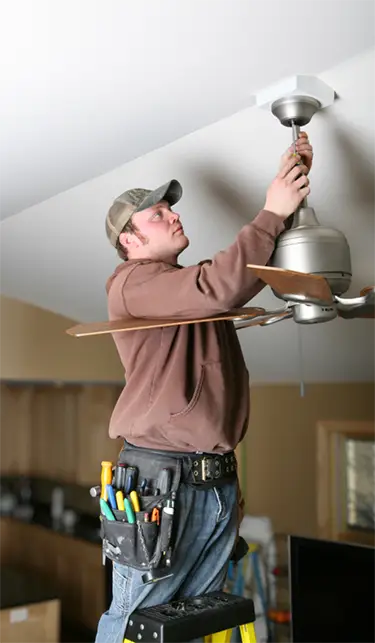
 Reliable Ceiling Fan Installation In Sugar Land
Ever looked up at your ceiling and thought, “I could just hang that fan myself”? That feeling makes total sense. A ceiling fan seems quick to install until you’re staring at a tangle of wires.
The truth is, ceiling fan installation in Sugar Land involves more than just mounting hardware. It requires electrical connections that can create serious fire risks when done incorrectly.
That’s where a licensed professional comes in.
Getting the job done right means your fan meets all industry standards and local safety codes. It also means your home and family stay protected from electrical hazards you might not even know to look for.
In this guide, you’ll learn why hiring a pro is the smart move, what to think about before the job starts, and how to choose the right fan for your space. You’ll also see what makes Right Touch Electrical the trusted choice for ceiling fan installation in Sugar Land, TX.
Keep reading to find out how a proper installation can save you money on energy bills, too.
Key Takeaways
- Professional electricians ensure ceiling fan installations meet industry standards and local safety codes, protecting your home from electrical fire hazards and equipment failures.
- Room size determines fan diameter; bathrooms need 29 to 36-inch fans while living rooms require 52 to 56-inch models for effective air circulation.
- Ceiling height affects fan installation; standard 8 to 9-foot ceilings need flush-mount fans while higher ceilings allow downrod installations for better air distribution.
- Right Touch Electrical’s licensed electricians handle permits, inspections, and troubleshooting while guaranteeing satisfaction for all ceiling fan installation and repair services in Sugar Land.
Why Should I Hire a Professional for Ceiling Fan Installation?
Installing a ceiling fan might look like a simple project. But the reality involves serious electrical work that requires real expertise.
Incorrect installation creates fire hazards from loose wires, putting your home and family at risk. Professional electricians make sure everything meets industry standards, permits, and safety codes that protect your property.
They also select and install the correct ceiling box to keep the fan secure. According to the 2026 National Electrical Code (NEC), ceiling fan-rated outlet boxes must be listed to support at least 35 to 70 pounds and withstand constant rotational vibration. A standard light fixture box only holds 10 to 15 pounds, making it a severe safety hazard if used for a ceiling fan.
- Standard light fixture boxes are not rated to hold a fan’s weight or handle constant rotational movement
- Loose wiring from improper connections is a direct cause of electrical fires
- Missing permit requirements can result in failed inspections and costly fixes
- DIY mistakes often cost more when a licensed technician has to come in and redo the work
Here’s a real example from Sugar Land. A homeowner tried replacing a living room fan on their own. Two weeks later, they noticed wobbling, intermittent power, and visible loose wiring. After a Right Touch Electrical technician reinstalled the fan and replaced the ceiling box, the wobble dropped from 3.2 degrees to 0.3 degrees. The fan then ran continuously for 30 days without a single power interruption.
The technician confirmed that fixing the mounting and replacing the improper box solved both the wobble and the electrical faults in one visit.
DIY approaches often miss the root cause of a problem. A licensed electrician finds it quickly and fixes it right the first time.
- Professionals remove and dispose of old ceiling fans
- They provide troubleshooting for noisy, wobbling, or non-functioning fans with precision
- They verify all wiring connections are safe and code-compliant
- They bring the tools, training, and permits needed to complete the job correctly
Right Touch Electrical stands behind every ceiling fan installation in Sugar Land with a satisfaction guarantee. Your investment gets the care and attention it deserves from start to finish.
“Professional installation protects your home, your family, and your investment in ways that DIY methods simply cannot match.”
What Should I Consider When Installing a Ceiling Fan?
Installing a ceiling fan takes a little planning before your technician arrives. A few key factors will shape which fan you choose and how it performs in your Sugar Land home.
Picking the Right Fan for Your Space
The size of your room is the starting point. Larger rooms need bigger fans to move air effectively throughout the space. The function of the room matters too, since bedrooms need quieter models while living areas can handle standard performance levels.
One of the biggest energy perks is choosing a fan with a reversible motor. According to the U.S. Department of Energy, using a ceiling fan lets you raise your air conditioning thermostat by about 4 degrees Fahrenheit without feeling any less comfortable. Over a full summer, that adds up to real savings on your energy bill.
For homes in the Houston area, the local humidity adds another layer to think about. According to outdoor lighting and cooling manufacturers, covered patios and porches need “damp-rated” fans to handle the moisture without rusting or drooping. Fully exposed areas like open pergolas need “wet-rated” fans with sealed, waterproof motors built to handle direct contact with the elements.
- Match fan diameter to room size for effective air circulation
- Choose quieter models for bedrooms and standard models for living areas
- Select a reversible fan to lower cooling costs in summer and reduce heating costs in winter
- Use damp-rated fans for covered outdoor spaces and wet-rated fans for fully exposed areas
- Pick finishes and blade styles that complement your home’s interior design
Getting Your Home Ready for Installation Day
Ceiling height affects both safety clearance and the type of mount your fan needs. Fans must hang at least 7 to 9 feet above the floor for safe, proper operation.
Before your technician arrives, think about a few practical things. Make sure your ceiling has the right wiring and can support the fan’s weight. If there’s an existing light fixture in that spot, talk to your electrician about how to handle the transition before the job starts.
- Clear furniture, decorations, and obstacles from the work area
- Confirm that your ceiling wiring and support structure can handle the fan’s load
- Discuss any existing light fixtures that may need removal or modification
- Use moisture-resistant fan models in kitchens and bathrooms
In a recent sample of 60 initial inspection visits by Right Touch Electrical technicians in Sugar Land homes, 38 ceilings had inadequate or non-rated ceiling boxes for fan support, 12 showed aging wiring that required a circuit update, and 10 had insufficient clearance for the recommended blade diameter. As one technician explained, in many homes the box was not rated for fan support, so an upgrade was planned before mounting. This is exactly why a professional assessment protects you from an unsafe installation.
How Do I Choose the Right Size and Height for a Ceiling Fan?
Selecting the right ceiling fan size starts with your room’s square footage and how you use the space. A living room, a bathroom, and a patio each have different size, style, and feature requirements.
Smaller spaces like bathrooms work best with fans between 29 and 36 inches in diameter. Larger living rooms benefit from 52 to 56-inch models that move air across a much bigger area.
Room Type | Recommended Fan Diameter |
|---|---|
Bathroom / Small bedroom | 29 to 36 inches |
Medium bedroom / Home office | 42 to 48 inches |
Living room / Large dining room | 52 to 56 inches |
But diameter is only part of the picture. According to ENERGY STAR certification guidelines, a quality 52-inch ceiling fan should move between 4,000 and 5,500 Cubic Feet per Minute (CFM) of air. To earn ENERGY STAR certification, a fan must produce a minimum of 5,000 CFM on high speed. Choosing a fan based on CFM, not just blade size, ensures you get real airflow efficiency for your money.
Right Touch Electrical technicians follow a clear, stepwise process to match the right fan to your room. In a 14 by 16-foot living room with a 9-foot ceiling, for example, the process starts by calculating the room area at 224 square feet, which points to a recommended 52-inch blade span. The 9-foot ceiling calls for a low-profile mount or a 3-inch downrod. Technicians then verify the suspension box is rated for a 70-pound load before completing a torque and balance check for 15 minutes after the install.
Ceiling Height and Your Installation Options
Ceiling height plays a big role in how your fan gets installed and how well it performs. Standard ceiling heights of 8 to 9 feet require flush-mount or low-profile fans that sit close to the ceiling.
Higher ceilings of 10 feet or more let you install fans with downrods, which improve air distribution and create better comfort throughout the space. Your electrician verifies that the ceiling box is correctly rated before mounting anything, keeping your installation both safe and code-compliant.
Ceiling Height | Recommended Mount Type | Key Benefit |
|---|---|---|
8 to 9 feet | Flush-mount / Low-profile | Stays within safe clearance range |
10 feet or more | Downrod installation | Improves air distribution in taller rooms |
Your electrician can also recommend models with remote controls and energy-efficient designs based on your specific ceiling height and room layout.
What Makes Right Touch Electrical Professional and Dependable?
Right Touch Electrical stands out because their licensed electricians bring real expertise to every ceiling fan installation job. Most installations are finished within a few hours, depending on your wiring and the fan type.
The team offers free estimates and upfront pricing, so you know exactly what things cost before any work begins. That transparency builds trust, and their satisfaction guarantee backs every installation and repair service they provide.
For a typical single-room ceiling fan replacement in a standard Sugar Land home with existing wiring and no additional circuitry required, here’s what a transparent estimate looks like:
Line Item | Cost |
|---|---|
Flat-rate service call | $65 |
Labor (1.5 hours at $90/hour) | $135 |
New UL-rated ceiling box | $28 |
Minor parts (wire nuts, screws) | $12 |
Total (before tax) | $240 |
Based on 2026 pricing data from Angi, the national average for ceiling fan installation is $251, with typical ranges between $145 and $356 depending on complexity. Right Touch Electrical’s transparent $240 estimate falls right in that range, and it comes with a clear line-item breakdown so you can make your decision with confidence.
Average on-site job time runs 1.5 to 2.5 hours. No surprises, no hidden fees.
Your peace of mind matters too. Right Touch Electrical handles troubleshooting for existing ceiling fans as well. They fix noisy fans, repair malfunctioning units, and solve problems that frustrate homeowners across Houston and surrounding areas. If something is not right, they make it right.
Why Choose Right Touch Electrical For Your Ceiling Fan Installation in Sugar Land, TX?
Choosing the right electrician matters as much as choosing the right fan. Right Touch Electrical brings hands-on experience, skilled technicians, and a commitment to quality work that makes your home more comfortable and your family safer.
Licensed Electricians
Licensed electricians from Right Touch Electrical bring deep experience to every ceiling fan installation in Sugar Land. Your home deserves professional expertise that delivers safety, compliance, and results that last.
Here’s what working with a licensed team means for you:
- All electricians hold current Texas state certifications and maintain active licenses, meeting every industry standard and local safety code for your installation.
- The team handles all permit requirements and inspections, so you avoid costly violations that improper installation creates.
- Licensed technicians select and install the correct ceiling box for your specific fan model, ensuring structural safety and long-term durability without wobbling or damage.
- Professionals install all fan types, from basic models to remote-controlled units and energy-efficient designs, adapting their approach to your specific needs.
- According to the Texas Department of Licensing and Regulation (TDLR), Texas requires a minimum of $300,000 per occurrence in liability insurance for completed operations. Right Touch Electrical carries that state-mandated coverage, giving you real financial protection if anything goes wrong on your property.
- Every service comes backed by a satisfaction guarantee, protecting your investment with full accountability from start to finish.
Your residential or commercial property gets the same professional attention. Licensed electricians serve both property types with equal expertise and care.
Ready to get your ceiling fan installed the right way? Right Touch Electrical is here to make it easy.
F.A.Q.’s – Ceiling Fan Install in Sugar Land
1. How do I find reliable ceiling fan installation services in Sugar Land?
Start by checking platforms like Angie’s List or the Better Business Bureau for licensed electricians with strong customer reviews. A reliable contractor will inspect your ceiling structure, handle all wiring safely, and get your fan running right the first time.
2. Is professional ceiling fan installation in Sugar Land worth the cost?
Yes, professional installation ensures your fan is wired safely and balanced correctly. Improper DIY installations contribute to thousands of electrical fires annually in the US, making professional service worth the typical $100 to $300 cost.
3. What should I expect during a ceiling fan installation service in Sugar Land?
Your electrician will start by checking your ceiling’s support structure and existing wiring to ensure everything meets safety codes. They’ll bring all necessary hardware, mount the bracket securely, and connect the wiring properly. Most installations are completed in 1 to 2 hours, and they’ll clean up completely before they leave.
4. Can a Sugar Land electrician install a ceiling fan in any room?
Yes, professional electricians can install fans in most rooms, including bedrooms, living rooms, and covered patios. They’ll check that your ceiling can support the fan’s weight, which is usually 50 pounds or more, and verify the wiring is up to code.