Right Touch Electrical

Houston Electrician

  • Residential
    • Emergency Electrical Services
      Electrical Panel Replacement
      Electrical Meter Can Replacement
      Electrical Troubleshooting
      Circuit Repair & Installation
      Lightning Strike Evaluations
      Smart Home Solutions
    • Circuit Breaker & Fuse Replacement
      Electrical Grounding
      Electrical Outlets & Switches
      House Rewiring
      Electrical Home Safety Inspections
      EV Charging Station Installation
    • Home Remodeling & Renovations
      Commercial Electrical Services
      Light Fixture Installation
      Ceiling Fan Installation
      Smoke Detector Installation
      Commercial Low Voltage
      Home Generator Installations
  • Commercial
  • About
    • Our Company
    • Core Values
    • Join Our Team
    • Referral Program
  • Specials
  • No-Payment Options
  • (281) 407-6199
  • Schedule

Home Electrical Safety Tips

It’s essential to stay on top of electrical safety in your home. From regularly checking power cords and extension cables for frayed insulation to starting a cooked-up habit of plugging only necessary electronics into wall sockets, it’s essential to take the time and effort to make sure you’re aware of any potential electrical hazards. While technology has come a long way when it comes to making electronic devices safer, we should still be vigilant about using them properly rather than letting bad habits draw out their device lifespans. In this blog post, we’ll cover some tips that will ensure your home remains free from any unwarranted risks associated with electricity use. Read on for more information!

Know the basics of your home electrical system- familiarize yourself with the panel, outlets, and wiring.

Your home’s electrical system is a complex network of wiring, outlets, switches, and panels that work together to distribute electricity throughout your house. Familiarizing yourself with the essential components of your electrical system can help ensure that your home stays safe and functioning correctly. Take time to locate your home’s electrical panel, which serves as the central hub for the system. Learn where all of your electrical outlets are located and make sure they are all correctly grounded. Check your wiring to ensure proper insulation and proper connections. By having a basic understanding of your home’s electrical system, you will be better equipped to maintain your home’s electric health for years to come.

Check your outlets for loose wiring by performing a simple voltage test to keep your electrical systems safe.

As we rely more and more on electricity to power our daily lives, it’s vital to ensure that our electrical systems are functioning safely and efficiently. One way to do this is by performing a simple voltage test to check for loose wiring in your outlets. This easy process involves using a voltage tester to measure the amount of electricity flowing through your outlets and looking for any irregular readings. By taking a few moments to perform this check, you can identify and prevent any hazardous electrical issues before they occur. So, don’t wait until it’s too late – take the time to check your outlets today and rest easy knowing your home is powered safely.

Inspect your home’s wiring regularly for signs of damage or fraying to maintain your home’s electric health.

Keeping your home’s wiring in tip-top shape is essential for the safety of your household, as well as the longevity of your electrical system. It’s necessary to inspect your wiring regularly, especially if you live in an older home or have experienced power surges or outages. Signs of damage or fraying can indicate potential hazards, such as electrical fires or shocks. By taking a proactive approach to maintaining your home’s electric health, you can prevent these potential risks and ensure that your family stays safe and secure. Plus, keeping your electrical system in good condition can also save you money in the long run by reducing the need for costly repairs or replacements. So take the time to inspect your home’s wiring and give yourself some peace of mind knowing that your electric system is functioning safely and efficiently.

Make sure to unplug all electronics when not in use to maintain your home’s electrical health.

In today’s technologically advanced world, it’s easy to lose track of the amount of electricity being consumed by our electronic devices. While these devices undoubtedly make our lives easier, they can also be a source of increased electricity bills if we don’t keep a close eye on them. One simple step you can take to maintain your home’s electrical health is to unplug all electronics when they’re not in use. This reduces the amount of standby power that’s being used, which can make a significant difference over time. Even if you’re only unplugging a few devices, it’s a worthwhile habit to get into. Not only will it help reduce your energy bills, but it also ensures that your home’s electrical systems are running as efficiently as possible. So, the next time you’re finished using your laptop or charging your phone, take a moment to unplug it and enjoy a more energy-efficient home.

Replace any frayed or damaged cords and wires

as soon as possible; they could be dangerous to your home’s electric health.
Your home’s electrical health is crucial to ensuring the safety and proper functioning of all your electronic devices. One potential danger that often goes unnoticed is frayed or damaged cords and wires. These seemingly harmless imperfections can pose a severe risk to not only your devices but also your home. To prevent electrical shorts, fires, and other hazards caused by damaged wires, it is essential to promptly replace any cords or wires that have become frayed or damaged. Taking these precautions may seem like a small task, but it can play a significant role in keeping your home and loved ones safe. So, don’t take any chances- keep an eye out for any potential problems and act fast to replace any damaged cords or wires.

Install safety features such as GFCI outlets, circuit breakers, and ground fault interrupters to maintain your home’s electric health.

The importance of home safety must be addressed, and maintaining your home’s electric health is a crucial aspect that must be addressed. To achieve this, it is essential to install safety features such as GFCI outlets, circuit breakers, and ground fault interrupters. These are designed to prevent electrical hazards that could cause injury or lead to property damage. For instance, GFCI outlets protect against electrical shocks, while circuit breakers automatically shut down when a circuit is overloaded or shorted. As a homeowner, it is wise to prioritize the safety of your family and property by installing these electrical safety features. It is also essential to seek professional help in such installations to ensure that they are done correctly and effectively. Don’t ignore the risks that come with electrical faults—act by investing in safety features.

Use safety covers on all unused outlets to maintain your home’s electric health.

Electricity is the foundation of modern life – it powers our homes, our workplaces, and everything in between. Yet, it’s also a powerful force that must be respected and handled with care. One simple step you can take to ensure the safety of your home and loved ones is to use safety covers on all unused outlets. These covers provide a simple but effective barrier to prevent children or curious pets from sticking their fingers or paws into live electrical sockets. Additionally, covering unused outlets can protect your home from dust, debris, or other foreign objects that could pose a risk to your electrical health. By taking this proactive step, you can rest assured that your home’s electric health is being maintained and that your family is protected from potential hazards.

Use extension cords sparingly and never plug too many devices into one outlet to maintain your home’s electric health.

When it comes to maintaining your home’s electrical health, it’s essential to be mindful of how much energy you’re using. One easy way to reduce your energy consumption is to use extension cords sparingly. Sure, they may be convenient, but the truth is that extension cords are not meant to be permanent solutions. Instead, they should only be used for short-term needs. Additionally, avoid plugging too many devices into one outlet. Overloading an outlet can not only cause your appliances to fail, but it can also lead to electrical fires. By being mindful of your energy usage and avoiding these common mistakes, you can maintain a safe and healthy home.

Try to keep all electric appliances away from water sources to avoid any potential hazards and maintain your home’s electric health.

Electric appliances have become a staple in our daily lives, from washing machines to toasters. While these appliances have made our lives easier and more convenient, they can also be a hazard if not used properly. One of the main concerns when it comes to electric appliances is water. Water and electricity are a dangerous combination that can lead to electrocution. To minimize the risk of an accident, it’s essential to keep all electric appliances away from sources of water, such as sinks, bathtubs, and shower areas. Maintaining your home’s electric health not only keeps you and your family safe but also prolongs the lifespan of your appliances. It’s important to remember always to use caution when using electric appliances and to inspect them for any signs of damage regularly.

Let Us Help You!

Because Right Touch Electrical is a locally owned and operated residential electrical contractor, we understand how electrical issues are more than disruptive. That’s why you can depend on us for fast response. We arrive when promised, provide safe and efficient electrical work, then clean up like we were never there. Here’s the best part: Right Touch Electrical backs our electrical repairs and replacement services with a lifetime workmanship guarantee—another way we earn your 100% satisfaction.

Why choose Right Touch for electrical repairs and services?

We believe in building lifelong client relationships. That’s why we arrive when promised every time. And, we even call to let you know we’re on the way. That’s because we would never want you to have to wait around. Upon arrival, we get right to work assessing what’s needed—and we give you options with guaranteed upfront pricing—never a sales pitch. You choose the solution that’s best for you.

We believe lasting solutions lead to lasting relationships, so that’s our approach at Right Touch Electrical. How can we be of service to you?
Filed Under: Blog

Need To Replace Your Electric Outlets? Here’s Why

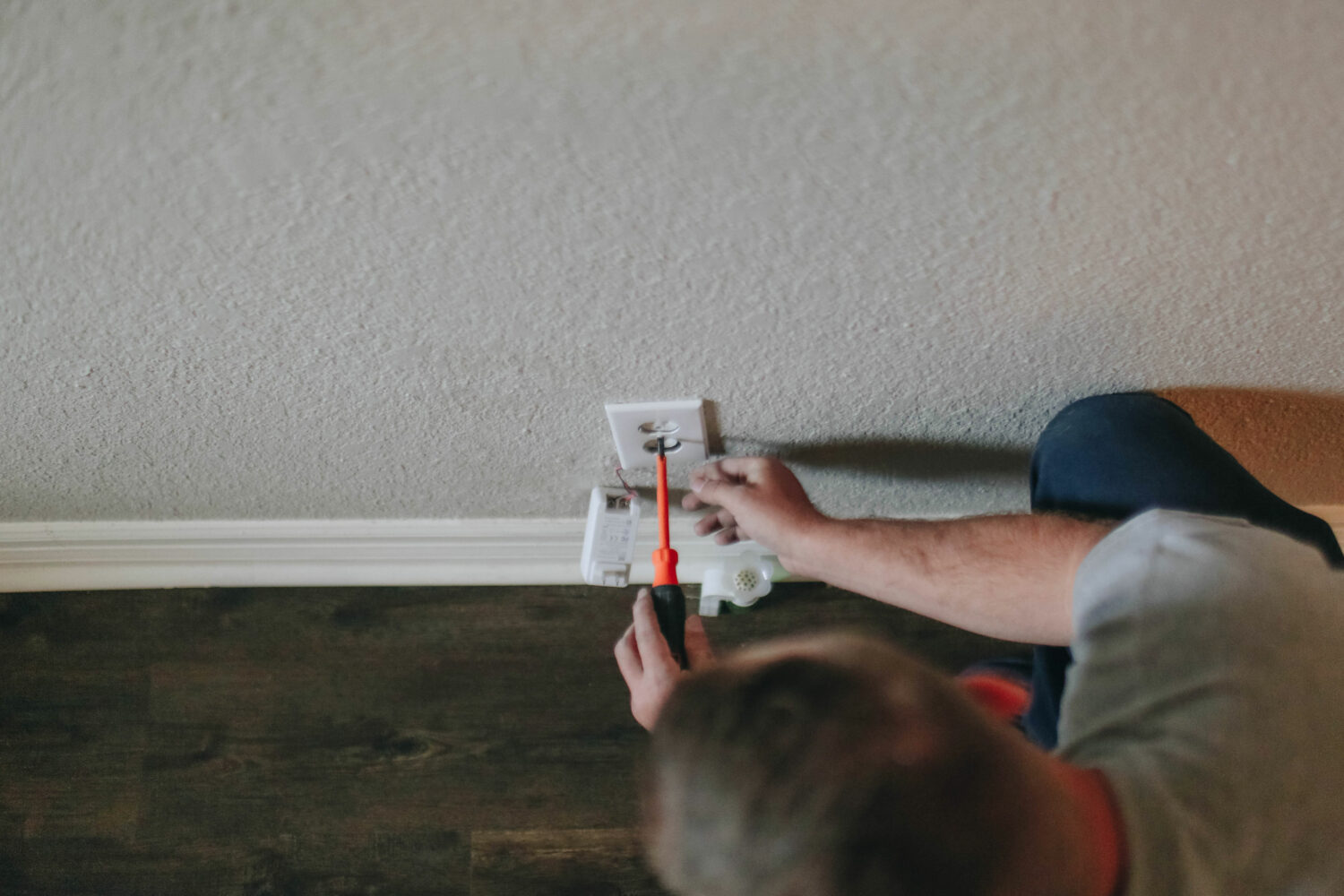
electrician from right touch electrical screwing in and installing an electrical outlet near floorboardWhen it comes to your home’s electrical system, the only thing worse than not having enough outlets is having outlets that are no longer working correctly. Unfortunately, over time and due to general wear and tear, there may come a point when your electrical outlets begin to malfunction or fail. If you think that this could be happening in your house, then you need to make sure that you stay informed on the potential signs of trouble and know how to tell if it’s time for new outlets. Here are some of the most common signals that indicate an outdated outlet system. Replace your electrical outlets with Right Touch Electrical.
Flickering lights – this can be a sign of a bad connection or worn-out wiring:

If you’ve ever experienced flickering lights in your home, you know just how annoying they can be. But did you know that these flickers could be a sign of a more significant electrical issue? Often, flickering lights indicate a terrible connection or worn-out outlets within your electrical system. Not only can this cause further disruptions in your lighting, but it can also pose a safety risk to your home. Your best bet is to have a professional electrician come and inspect your outlets to determine if replacements are necessary. Don’t let flickering lights lead to more severe consequences; take action and ensure your home’s electrical health is in top shape.

Loose outlets – is the outlet wobbling, or does it feel warm to the touch when you plug something in?:

Have you noticed that your outlet feels loose when you plug something in, or does it feel warm when in use? These could be warning signs that you need to replace your outlets. Loose or wobbling outlets can be caused by general wear and tear or because of loose wiring connections. This can be a fire hazard and can put your home at risk. Similarly, warm outlets may indicate an electrical issue that needs to be addressed promptly. Replacing your outlets might seem like a small matter, but it’s an essential step to ensuring that the electrical system in your home is safe and functioning correctly. Don’t wait until it’s too late – call a professional electrician today to inspect and replace any loose or worn-out outlets.

Sparks or burning smells – these are significant signs that your electrical outlets need to be replaced immediately:

Sparks or burning smells can be alarming and often indicate that your electrical outlets are in need of immediate replacement. These signs should always be addressed since they could lead to potentially hazardous situations like electrical fires. Electrical outlets are vital components of your home that provide power to your everyday devices. Over time, they can become damaged, creating worn-out wires or loose connections that can cause sparks or emit burning smells. Replacing electrical outlets can help prevent severe electrical issues and provide you with a more secure and efficient electrical system. Always act promptly when you notice these warning signs, and seek the help of a professional electrician to ensure your home stays safe.

Half-functioning outlets – if one plug is working, but the other one isn’t, your outlets need to be replaced ASAP:

If you ever notice that one of the plugs in your outlet is working, but the other isn’t, it’s time to replace your outlets as soon as possible. These half-functioning outlets are a common issue in many homes, and they can be pretty frustrating to deal with. Not only do they limit the number of devices you can plug in, but they can also pose a safety hazard if left unchecked. Faulty wiring can cause overheating, sparking, and even electrical fires in some cases. However, with a quick replacement of your outlets, you can efficiently resolve the issue and ensure that all of your devices are functioning correctly. So, don’t wait until it’s too late. Take action now to replace those half-functioning outlets and enjoy a safer, more functional home.

Outlets with multiple adapters plugged in – if you need to stack up more than two adapters, you need to replace your electric outlets:

If you find yourself constantly struggling to plug in all of your electronic devices due to the limited number of outlets in your home, you may be tempted to stack multiple adapters on top of each other. However, this not only looks unsightly but also poses a significant electrical hazard. In fact, there is a limit to how many adapters you can safely plug into a single outlet before it becomes overloaded and potentially causes a fire. Instead, consider replacing your outlets with ones that have more slots or even USB ports. This will not only eliminate the need for multiple adapters but will also make your home more efficient and safe. So, the next time you’re struggling with a tangled mess of cords and plugs, remember that a simple change of outlets can make all the difference.

Outdated wiring – do you still have two-pronged outlets instead of three-pronged ones? Replace them immediately:

If you still have two-pronged outlets in your home, it is crucial to replace them immediately. Outdated wiring from decades ago used aluminum instead of copper, which can pose a significant fire hazard. When aluminum wiring heats up, it expands and contracts, which can cause the connection between the wire and the outlet or switch to loosen over time. This can create a hotspot and potentially cause a fire. Replacing two-pronged outlets with three-pronged ones can help ensure your safety and prevent any potential hazards caused by outdated wiring. Don’t wait; prioritize your safety and security by upgrading your home’s electrical system today.

Too much heat – if the outlet is too hot to the touch, there may be a severe problem with it:

It’s not uncommon for our electrical outlets to become warm, especially if we’re using them extensively. But if the outlet is hot to the touch, this may indicate a more serious issue that needs immediate attention. Overheating outlets are a fire hazard and can damage your electrical appliances. If you’ve noticed that your outlets are consistently too hot, then it’s time for a replacement. This may seem like a daunting task, but it’s a crucial one in maintaining the safety and functionality of your home’s electrical system. Don’t wait until it’s too late; take action and ensure your family’s safety by replacing your overheating outlets.

If your outlets are looking cracked and worn, you may need to replace them immediately:

Are your outlets starting to look a bit worse for wear? If you’ve noticed any cracks or other signs of damage, it’s time to take action. Leaving damaged outlets in place can not only detract from the aesthetic of your home but can also be a severe safety hazard. But don’t worry – replacing your outlets is a quick and easy fix. Whether you choose to do it yourself or hire a professional, the process is relatively straightforward. And the peace of mind that comes with having safe, visually appealing outlets in every room of your home is well worth the effort. So why wait? If you’re dealing with cracked or worn outlets, make replacing them a top priority as soon as possible.

Why Choose Right Touch Electrical?

It may be obvious when you need new outlets or switches, but minor issues often fly under your radar. A problem left unfixed can turn into a major hazard. How can you know you need a professional?

Professional Outlet & Switch Repair, Installation & Replacement
Right Touch Electrical offers electrical outlets and switches for your home and business, whether you need ambient dimmer switches for the office or weatherproof outlets for the backyard. If you’re looking for repairs, replacement, or installation, our team of Houston electricians has the experience and expertise to tackle the project, regardless of size or emergency. Contact us today so we can help you get the power you need.

Make your outlet repair appointment today!
If you believe your outlets and switches need replacing, call Right Touch Electrical—trusted Houston electricians. We provide quality with a master’s touch, which means we do the job right the first time. Since the beginning, our small company has evolved into a large and successful electrical service company because we believe in serving, not selling, honesty, quality, and making you a lifelong client. Whether you need commercial or residential electrical services, our clean, professional, and certified electricians are here to help.

Filed Under: Blog

Signs Your House Needs Surge Protection

If you’re a homeowner, you’ve most likely speculated about the potential for an electrical surge in your home at one point or another. Unfortunately, even if electricity runs smoothly within your home, it doesn’t necessarily mean everything is functioning as it should be. Electrical surges often occur without warning and can cause significant damage to your electronics if left unprotected. To help prevent damage from power surges, your house needs surge protection. Here are some telltale signs that it may be time to invest in a good quality surge protector for your home.

Unusual electrical sounds in your wall outlet:

Electrical sounds in outlets can be caused by a variety of potential issues, such as loose wiring, updated appliances creating a strain on the outlet’s current, or corrosion buildup inside the outlet affecting the flow of electricity. If you hear unusual electrical sounds like buzzing, humming, or crackling from your wall outlets, you should have an electrician inspect them and ensure everything is safe. Although some minor buzzing or humming noises are normal when items are connected to power, persistent and louder noises than usual can be warning signs of something needing attention. To keep your family and home safe, getting the issue checked out early is best.

Your electrical outlets are hot to the touch:

Do your electrical outlets feel like they’ve heated up? This could be a sign that something is wrong with your home’s wiring system. If you feel any heat coming from an outlet, turn off the power to that area immediately and call an electrician to get it checked out. Never ignore a hot outlet, as it can easily cause more significant problems in the future, such as fires or shocks. Be sure to keep any flammable materials well away from outlets when the electricity is still on, and ensure all unused outlets or appliances are unplugged. Taking preventive action now can help protect your home from potential hazards created by a faulty wiring setup.

Regular power outages in your home:

Regular power outages can be a major inconvenience, especially during summer when air conditioning and refrigeration are essential. These outages can easily be avoided with proper planning and maintenance of your home’s electrical system. Investing in surge protectors to prevent overloading and outages, regularly checking circuits for potential problems, setting up generators for backup power, and working with an electrician to inspect wiring will often do the trick. Addressing any potential electrical problems early on can help avert any severe issues from occurring in the future and give you peace of mind knowing that your power will stay on despite regular outages in the neighborhood.

An unexplained burning smell coming from your outlets or appliances:

If you ever have the feeling that something is not right with an outlet or appliance in your home, and it’s accompanied by a burning smell, you should take immediate action. It could be as minor as an overloaded socket or power strip; however, it also could indicate a major electrical problem. Further investigation is required to diagnose the issue accurately – make sure to call an electrician if there are signs of an unsafe current in your outlets. An unexplained burning smell could be indicative of short circuits, loose wiring, or faulty circuitry, all of which can lead to potential dangers such as fire, electrocution, and even structural damage if not addressed. Taking the time to investigate further and hire a qualified professional can be hugely beneficial in the long run – it’s better to be safe than sorry!

Sudden damage to electronics or appliances, such as a blown a fuse:

When households are struck by sudden damage to electronic or home appliances, the results can be inconvenient and costly. A blown fuse is a common occurrence that can be caused by an overload of energy running through a circuit, leading to the interruption of power flowing through the fuse. It’s important to recognize when a blown fuse has occurred so you can pinpoint the problem and replace it promptly – otherwise, you risk damages occurring throughout your house. Blown fuses are typically located in a fuse box, but they can also appear in busy circuits like air conditioners and microwave ovens. To prevent future occurrences, identify potential causes like overloaded circuits and eliminate them. Taking steps to prevent further damage will save you time, money, and frustration!

Lights and appliances flickering on and off for no reason:

Suppose you have been reporting their lights and appliances flickering on and off for no reason, a phenomenon that can be very concerning when it is unexplained. In most of these cases, the cause of the issue could be wiring issues or poor connections that should be looked into by a professional electrician. Additionally, flickering could indicate that something has overloaded the circuit if it happened while using certain appliances or if you’ve added in new electrical equipment recently. Some fixes include decreasing the load on a circuit, replacing parts of the wiring, or bringing in more power to support more outlets and lights. Having an understanding of why your lights are flickering is key to ensuring everyone’s safety and reducing any potential damage to your home’s electrical system.

Discoloration or burning near an outlet:

Electrical surges can be damaging and costly, so it is important to make sure your home’s outlets are protected. If you notice discoloration or burning near an outlet, this could be a sign that your electronics are exposed to the excess voltage that can cause irreparable damage. Surge protection is vital to keeping your home and family safe from any potential risks. It can limit the sudden flow of electricity by redirecting the excess energy away from vulnerable equipment, reducing the chances for irreversible damage. In addition, surge protection guards against incorrect wiring and faulty appliances in both residential and business settings. To ensure all your electronic devices stay safe from electrical surges, consider investing in surge protection today!

Unusual Sounds Come Out Of Your Electronics:

Power surges can occur without warning and have the potential to be serious problems for unprotected electronics. Damages to expensive or treasured tools or devices can not only be costly but also an inconvenience if irreparable. Therefore, it is important to be aware of any unusual sound or smell coming from your electronics, as this is a sure sign that surge protection is needed. Safety measures such as surge protectors are essential to guard against sudden changes in electricity supply and provide protection against potentially disastrous consequences in terms of equipment malfunctions or even fire hazards. In addition, they can be installed quickly and easily, so there’s no excuse for not safeguarding valuable electronic possessions!

Your Circuit Breakers and Light Switches Stop Working Properly:

Many of us don’t think about our circuit breakers and light switches until they stop working properly. Perhaps you hear a faint humming noise when you turn them on. Or maybe the lights flicker or it takes multiple attempts to get the breaker to trip. In either case, it could be a sign that your wiring is faulty and needs surge protection to protect your home from potential hazards like fires, shocks, and other dangerous incidents. Good quality surge protection can save you time, hassle and money! Surge protection can also help prevent modern electronic devices like computers, tablets, game consoles, smart speakers and more from experiencing a power outage or damage due to sudden voltage spikes.

How Right Touch Solves Your Surge Protection Issue:

Whenever you experience a surge event of any type, it’s time to call Right Touch Electrical for an immediate system evaluation by one of our licensed electricians. In the meantime, check for functionality with your circuit breakers and your light switches, and any outlets. In addition, check to see if your landlines are working.

An electrical power surge can cause various problems ranging in severity from relatively minor to very dangerous. Many times, we find hidden damage. That’s why we recommend you contact us immediately.

Right Touch Electrical professional electricians receive specialized training in power surge evaluation. We also have the necessary equipment, including MEG/Ohm testing and thermal imaging, to evaluate internal surge damage properly.

Our safety experts will thoroughly evaluate your entire electrical system, pinpoint the problems, and engineer the correct repair solutions. We will also give you the right information and keep you thoroughly informed throughout the process.

Once the inspection and diagnosis are made, our team will go over each repair option available, provide firm pricing for each option, answering any questions to your satisfaction. If needed, we are equipped to provide any information required by your insurance company, including a Master Electrician’s Report.

Your safety is our number one priority at Right Touch Electrical. For any electrical service you need after a lightning strike or a power surge, call us at (832) 979-7350

Filed Under: Blog

Signs Your House Needs Electrical Repairs

Are you concerned that your home may need electrical repairs but don’t know what to look for? Look no further! Electrical issues can cause a variety of headaches for homeowners; fortunately, with a keen eye and the proper knowledge, it’s possible to identify when something doesn’t seem quite right. Throughout this blog post, we’ll explore some of the critical signs that indicate potential electrical problems in your home so you can act quickly and safely to repair any issues before they become major disasters. Read on to learn more about the common telltale indicators that you might be dealing with an electrical problem.

1. Flickering Lights

If you’re noticing flickering lights coming from electrical fixtures, it’s probably time to call in an experienced electrician. Electrical problems have the potential to become dangerous, especially if you don’t have the right tools and expertise to diagnose and resolve them. An electrician will be able to inspect and ensure that your wiring is up-to-date and safe and can provide repair services if any issues are found. Taking this precaution now can help prevent accidents or damage in the future. Don’t take a chance with electricity – contact a reputable electrician if your home has strange noises or inconsistent power!

2. Outdated Wiring

Having outdated wiring in your home can be a dangerous thing. It increases the chances of an electrical overload and is not reliable. If you experience problems such as flickering lights, frequent power loss, or tripping breaker switches, it could be due to old wiring that cannot adequately manage the load of modern electricity usage. Additionally, if an emergency arises – such as an electrical fire – up-to-date wiring systems are often required by firefighters so they can adequately handle a situation safely. Thus, it is essential to check your house’s wiring on a regular basis, and if anything is out of date, then act immediately to ensure safety and proper functioning for yourself, your family, and your home.

3. Overheated Appliances

Overheated appliances can be a significant safety hazard both for people and property. If your refrigerator, water heater, or any other appliance seems to be running too hot, it’s probably best to investigate the issue rather than simply wait until the appliance breaks down. This could provide clues as to what is causing the higher-than-normal temperature readings and will also give you an opportunity to resolve the underlying electrical issue before it becomes more severe and expensive. Taking this proactive approach will not only ensure that your safety is protected but may also save you money in terms of repairs or replacements further down the line.

4. Power Surges

Power surges may be sudden, but they are certainly not something to ignore. While some power surges can simply be a glitch in the system and harmless, a repeated power surge or powerful one could be a sign that there’s an issue with your wiring somewhere in the home. If you experience frequent, strong power surges, it is vital to get the problem checked out by a licensed electrician as soon as possible; this kind of electrical malfunction could potentially cause damage to your home and its electrical equipment. Your safety should always come first – don’t wait until it’s too late!

5. Electrical shocks

Electrical shocks can be a severe issue, and if you feel a shock anytime you touch an electrical device or outlet, it is a warning sign of faulty wiring. This puts you at risk of electric shock, which ranges from mild to severe depending on the voltage in the circuit. Instantly stopping further contact with the item is essential to prevent further injury or even death. It is recommended to turn off all power at the circuit breaker before inspecting for any damage – if you don’t know how to do this, it’s best to consult a licensed electrician for assistance. Ignoring these potential danger signs could result in even more severe outcomes, so always take care when dealing with unknown electrical devices or outlets.

6. Tripping Circuit Breakers

If circuits in your home are tripping more often than usual, it is recommended to call a qualified electrician immediately. Tripping circuit breakers are an indication of an issue with the wiring or circuits. National Electrical Code standards have outlined safety measures that must be strictly adhered to, and only a professional Electrician abides by such regulations when performing work. To find the problem, they may start by measuring the amperage and voltage of all appliances, outlets, and panels within the home. In some cases, faulty wiring can even lead to severe damage like fires, so getting it checked right away is crucial.

7. Power Outages

It is no surprise that frequent power outages are an indication of a more significant issue. These outages can be caused by a variety of factors, including aging infrastructure, increased demand on the power grid, severe weather events, as well as other electrical issues. Power outages can also happen for shorter durations, such as short-term voltage fluctuations. In any case, if you’re experiencing more power outages than usual, it could be time to call in a professional electrician to identify the cause and perform any necessary repairs or upgrades to the electrical infrastructure in your home or office. Taking proactive steps now may assist in avoiding further disruption due to prolonged outages in the future.

8. Sparking Appliances and Outlets

If you’ve noticed that there is more sparking coming from your appliances or outlets than usual, this could be a sign of an electrical issue. Sometimes sparks happen when you plug something in or while a device is running, but if the frequency of sparking has increased significantly, there may be an underlying cause that needs to be addressed. Make sure all of your wires and plugs are fitted correctly, and if it isn’t fixed after making those adjustments, then you should contact a professional electrician for further inspection. It’s essential to diagnose these types of issues as soon as possible because they can put both you and your electronics in danger due to potential shock hazards or fire risks.

9. Dead Electrical Outlets

The presence of dead electrical outlets in your home can be a sign that something is amiss with your electrical system. It may mean an issue such as faulty wiring, water leaking into the outlets, or an overloaded circuit. Always take caution if you come across more than one dead outlet, and call a certified electrician. A qualified technician can inspect the problem and ensure you are keeping your home safe by addressing any issues the investigation may reveal. Remember, it’s always best to be proactive when it comes to house maintenance issues since it’s better to address any concerns before they become major repairs.

10. Buzzing Sounds

Are you hearing buzzing or popping noises coming from your walls, outlets, or electrical appliances? That’s not a good sign! It could mean your electrical wiring is no longer safe. As soon as you notice any abnormal sounds like this coming from your electric system, it’s best to call a qualified electrician and have them take a look. Loose or faulty wiring presents a significant safety hazard, dramatically increasing your risk of an electrical fire that could affect your entire home. Don’t wait—take action and reach out so you know that your electric system is running as it should be.

11. Aluminium or Knob-and-tube wiring

In recent years, many outdated wiring systems, such as aluminum and knob-and-tube wiring, have become a widespread problem in residential homes. While they may have seemed like convenient solutions at the time they were first used, age has taken its toll on them over the years. Not only have these older systems been surpassed technologically by newer designs, but their sheer fragility means they are now potentially dangerous to use in residences. It is, therefore, highly advisable to upgrade your wiring system rather than to remain content with outdated technology. If you are not sure what type of wiring fits your needs best – it might be worth talking to an experienced electrician today.

12. Frayed wires

Frayed wires can lead to potentially dangerous consequences in the home. If left unchecked, these fraying wires may become exposed, potentially leading to an electric shock – and hazardous fires. Therefore, it is important to inspect any areas of a home that are active with electrical items like switches, outlets, and plugs for any worn or frayed wiring. If any such signs of wear present themselves, the wires should be replaced immediately. In order to ensure safety and avoid potential hazards, it is critical to regularly perform maintenance checks on the wiring of your home and take immediate remedial action when needed.

Why Choose Right Touch Electrical?

We believe in building lifelong client relationships. That’s why we arrive when promised every time. And, we even call to let you know we’re on the way. That’s because we would never want you to have to wait around. Upon arrival, we get right to work assessing what’s needed—and we give you options with guaranteed upfront pricing—never a sales pitch. You choose the solution that’s best for you.

We believe lasting solutions lead to lasting relationships, so that’s our approach at Right Touch Electrical. How can we be of service to you?

Filed Under: Blog

10 Silent Signs Your House Has a Major Electrical Problem

Usually, we don’t think about the wires and circuits in our homes until we flip a switch and something unexpected happens. Our insightful experience at Right Touch Electrical has taught us trouble can lurk within any home’s walls. If you notice the silent signs we share with you today, dealing with them before they cause major headaches could save you time and money in the long run with our electrical troubleshooting service.

Your Power Bill Suddenly Spikes

This can certainly be a seasonal issue. Most of us employ more kilowatt-hours when the temperature rises because we turn on our air conditioners, for example. If increased appliance usage does not explain your spike, your residence likely has an electrical problem. Your home may have one or more issues that can be properly addressed after professionally inspecting your system.

You Find Tangled Wires in Your Walls

Have you ever looked inside your home’s walls? You may have an access panel, or you might have done a little remodeling. If you have seen the wires within your home and felt uneasy about their messiness, trust your response.

Tangled wires could signify that the people who originally installed your home’s electrical system were not interested in details. When folks don’t pay attention, they make poor electrical connections. Eventually, those poor connections cause serious problems. If you are suspicious of your home’s wiring, put trained eyes on it. Expert inspection can tell you if your current wiring situation is safe or if you should have your home rewired.

Power Surges Occur Frequently in Your Home

We all experience surges in our homes. After all, power grids are quite susceptible to lightning strikes. If you notice power surging in your home more frequently than in your surrounding neighborhood, you should have your electrical system inspected.

Letting this problem go unaddressed may damage appliances and devices you use daily. Surely, that is a costlier option than professionally correcting your home’s problematic power surges.

Your Circuit Breaker Repeatedly Trips

This could be a big problem, and it may be related to the previous sign on our list. Still, circuit breakers also trip due to overloaded circuits. While your circuit breaker protects your home, overloading a circuit is a serious safety issue. Circuits get overloaded when we plug too many devices and appliances into them. As a result, excess heat builds on an overloaded circuit. That heat can cause a fire.

You may be able to easily solve this problem by unplugging devices from your overloaded circuit and moving them to other circuits. If your breaker stops tripping, then you don’t have a major problem. Alternatively, your home may need an additional circuit installed by a qualified electrician.

You Feel Mild Shocks When Turning On Devices

We have all felt an occasional, accidental shock when the air is dry. This scenario is a bit different. If you get shocked when you turn on a device plugged into your home’s electrical system, your home’s wires may have a serious issue.

Clearly, all electrical products have lifespans, so the shock may be caused by the device going bad. Faulty wiring can also be the cause. It is unsafe to troubleshoot this problem yourself, so we advise you to contact a trained electrician.

Wall Plates in Your Home Get Hot

When you flip a switch to turn off a light, do you notice heat? This is due to a problem with the wiring leading to that switch.

Often, people will let this sort of thing go in their homes. You must stop using this switch immediately. Turn off the circuit that feeds the switch, too. You are facing a strong fire hazard if you have even one wall plate with this heat issue. Multiple electrical problems can cause this heat, so have this issue looked at by experienced industry professionals who can troubleshoot it and fix it for you.

You Get Burned by a Light Bulb

If a light bulb causes you intense pain, you may have a serious problem. Light sockets have a maximum safe wattage. If the bulb you screw into that socket greatly exceeds that wattage, extreme heat will result. This issue can do more than burn your skin. It can melt insulation around the light socket, and it can cause house fires. To avoid this problem, simply find bulbs with the proper wattage for your light sockets.

Suddenly, You Smell Plastic Smoke

When you detect the faint smell of plastic burning, switch off everything in your home immediately. That smell indicates a high fire risk. You are smelling the coating on your home’s wires melting. This problem must be properly inspected, so contact professionals before you use your home’s power again.

Plugs Slip Out of Your Home’s Electrical Sockets

Have you ever walked by a lamp and found its plug on the floor? Such an occurrence can seem funny or quaint, but it is also a fire hazard. Even if your plugs only slip partially out of your electrical system’s sockets, your house has a major electrical problem. Time and gravity cause this issue. The plugs on appliances and devices should fit snugly in electrical outlets. As an outlet ages and wears, it can lose its capacity to grip a plug.

If you are comfortable with tools, you can replace old outlets in your home with today’s GFCI outlets. These outlets prevent electrocution, and they reduce fire potential in your home. Before replacing your own outlets, remember to switch off the appropriate circuits. To save time and possible frustration, have expert electricians install your new GFCI outlets.

You Discover Evidence of Mice Living in Your Home

Most of us don’t enjoy finding uninvited rodents in our homes, but you may not realize that they can indirectly start house fires. The clearest evidence of mouse activity in a home is droppings. If you see rodent evidence anywhere in your house, we advise you to check for chew marks on wires behind access panels and near your circuit breaker.

Whenever rodents chew through the coatings on electrical wires, sparks may fly, which can ignite nearby sawdust. We urge you to take the possibility of rodent damage on your home’s electrical system seriously and consider a professional inspection. After all, evidence of one mouse in your house is proof of more.

If you discover any signs of a major electrical problem in your house, reach out to Right Touch Electrical. We are your whole home wiring solution, and we can help you troubleshoot your home’s unique electrical issues.

Filed Under: Blog

Got Storm Related Electrical Damage? Here’s What To Do After

Severe storms or lightning can cause several forms of electrical damage in Texas. After a storm passes, trying to figure out where to start with addressing damage can feel overwhelming. When dealing with suspected or visible electrical damage, these are several important steps to take.

Stay Away From Damaged or Downed Power Lines

While looking for damage outdoors, be vigilant for power lines that are down or appear damaged. For example, if there is a utility pole that is leaning, stay far away from it. Always keep a distance of at least 30 feet from power lines that are down. If trees or other objects are touching a power line that is down or damaged, stay 30 feet away from those objects. Shuffle with both feet on the ground to move away from power lines or dangerous objects.

One significant danger with power lines is arcing. The higher overhead lines that are on utility poles are not covered with insulating material like the lines that hang lower and connect to homes. A person does not have to directly touch the line to be seriously injured or killed. For example, a person standing several feet from a 500-volt line can still be electrocuted if a power arc forms in the air between the person and the line.

If a power line is on the ground, call 911. Call the electric company to report a damaged power line, utility pole or generator if the line is not down.

Avoid Flooded Areas

A good rule to follow is to assume that any flooded area indoors or outdoors may have an electric current going through it. Outdoors, there may be damage to electrical components or wires. Some people may not see these dangers if they are submerged in enough water. There are just as many potential dangers indoors. For example, if a basement is flooded, there may still be fans or other devices plugged in under the water.

Submerged outlets can be dangerous even if nothing is connected to them. Also, service panels, switches and other parts of electrical systems can sustain damage from floodwaters. This is especially true in areas along coastlines since saltwater is corrosive. However, floodwater anywhere can cause significant damage.

Follow Electrical Safety Precautions if Power Remains Out

During severe storms, it is common for the power to go out and stay out for hours or even days. Two important safety precautions to prevent injuries or further electrical damage are to keep appliances unplugged if possible and to use generators correctly.

Appliance Safety

With appliances, it is better to disconnect their power cords before storms hit. However, this is not always possible if nobody is in the home or building. If the ground is dry under the appliance and the area around it, unplug it while the power is out. Do this for any electronics or appliances that are safe to unplug.

When the power is restored, it can cause an electrical surge. That sudden surge of electricity can damage electronics and appliances that are still connected to outlets. In some cases, it can also damage the cords of devices enough to cause electrical fires. Wet appliance safety is covered more in an upcoming section.

Generator Safety

Generator safety is important to prevent more electric damage or injuries. Some people buy backup generators to use when the power stays out for a while. These can be especially important for people who have medical equipment that requires electricity or businesses that have continuous refrigeration needs. Always keep generators dry, and carefully follow the instructions for using them. When refueling a generator, turn it off to let the engine cool before pouring in more fuel.

The generator should also be the correct size and type for its purpose. Do not plug it into a wall outlet. This can cause backfeed that has the potential to electrocute neighbors and even utility workers. The ideal solution is to have a professional electrician install a generator before severe storms arrive. Professionals can also determine the right type and size for each person’s needs.

Look for Signs of Lightning Damage

In addition to creating outdoor destruction, lightning has the potential to damage the whole electrical system in a home. The electrical current in a house is about 15 amps and 120 volts. In contrast, a lightning strike is about 30,000 amps and 300 million volts. When lightning strikes, it can also heat the air around it as high as 50,000 degrees Fahrenheit, which is about five times hotter than the sun’s surface. This extreme blast of heat can cause a roof to get hot enough to catch fire.

Even if a major fire does not occur from a direct strike, there are signs of it. Depending on the type of structure, there may be a charred area, burn marks or damaged shingles where lightning strikes. Brick chimneys or buildings may have broken or falling bricks in the spot where the lightning struck. If lightning directly strikes a home or business, there may also be a smell of melting plastic indoors. Additionally, people inside may notice a humming sound.

The blast of electric energy from lightning can cause dangerous power surges in power lines or in buildings. When there is a power surge from a lightning strike on a home or business, one sign may be smoke or burn marks near an electrical panel. An especially dangerous problem that can come from power surges is hot spots in the wiring. Since the wiring is covered, these spots are not visible. Surges can loosen connections in the wiring, and those weakened areas can become hot enough to cause electrical fires. Fortunately, professional electricians can detect them and fix wiring issues.

Check for Water Damage on Electric Appliances or Devices

Do not try to unplug electronics that are wet or were in standing water if they are still connected to an outlet. Any electric-powered device, HVAC component or appliance should not be used if it got wet during the storm. One of the most dangerous mistakes people make after severe storms is trying to use appliances after they let them dry. In a worst-case scenario, an appliance or electric device can cause electrocution when a person connects it to an outlet. It can also cause the device to stop working.

Appliances, HVAC components and electronic devices that got wet or were submerged in floodwater should be professionally inspected before they are used. It may be necessary to replace some items that cannot be professionally reconditioned after sustaining water damage.

Take Photos of Damage

When it is safe to do so, take photos of any signs of electrical damage for the insurance company. For example, if there are falling bricks outside and burn marks near the electrical panel indoors, take clear photos of them. Standard business insurance and homeowners insurance policies cover several forms of damage and fires from lightning strikes. Also, they may cover some damages that result from power surges. Be sure to also list any items that are damaged or are suspected of damage and require professional inspection. An insurance agent can provide instructions on how to report these and what steps to follow.

Call a Professional for Electric Repair Services

Do not try to fix any indoor or outdoor electrical equipment. Let professionals deal with outdoor damage, indoor damage, inspections and appliances or electronic devices that may be damaged.

What Power Companies Handle

Most components power companies fix or are responsible for are outdoors. These are some examples of issues to report to the local power company:

  • Damaged utility poles
  • Broken outdoor meter
  • Damaged outdoor connections
  • Sparking power lines or generators
  • Damaged outdoor service wires

What Electricians Handle

For any electrical damage inside a home or business, call an electrician. Professional electricians can safely complete electric troubleshooting to find problems and fix them. They look for hot spots and other dangers that home residents or building occupants may not otherwise find. Call an electrician if there was flooding in the home or building, there was a lightning strike or there is suspected damage from a power surge after an outage. If there are any other signs of indoor electrical damage due to broken windows or anything else, call an electrician. These are just a few examples of tasks electricians often handle when there is electrical damage from a storm:

  • Electric panel repair
  • Rewiring
  • Fixing connections
  • Inspecting fixtures, switches and outlets
  • Checking for hot spots and fire hazards
  • Megger testing

Megger testing assesses the condition of the electrical system’s insulation and is a common procedure after a lightning strike. For appliance and HVAC inspections or repairs, contact appliance repair technicians and HVAC technicians.

Think About Electrical Safety Improvements

When calling an electrician, it is also a good idea to consider upgrades. Many people realize the importance of adding safety features after a severe storm. These are a few common examples of safety upgrades to consider after storm-related damage.

Lightning Protection System

Installing a lightning rod outdoors may help prevent damage from lightning strikes. However, this is something a professional should do since proper installation is critical. In addition to a lightning rod, a lightning protection system should include professional surge protectors for incoming power and vulnerable appliances.

Surge Protectors

Whole-home surge protectors and commercial surge protectors can be valuable additions to homes or businesses that lack them. These devices can help protect electrical systems from dangerous power surges. They differ from point-of-use surge protectors, which are the power strips people are familiar with that connect to wall outlets. Point-of-use units can wear out and do not provide ample protection from lightning strikes.

Generator

Backup generators are helpful for businesses and some homes. If there are critical needs for continuous electricity, generators can prevent serious problems. For example, a person who has dialysis equipment at home should have an adequate generator. Businesses can benefit from generators to prevent interruptions that may be costly. Professionals can recommend the right size and type of generator and can install them properly.

Old Wires and Fuse Boxes

Old aluminum wiring that is found in many homes is a fire hazard. It expands more and breaks easier than copper. Rewiring an hold home is a job that an electrician can handle. Also, old fuse boxes should be updated with modern circuit breakers. They can handle larger electrical loads and are more convenient.

Electrical Damage Repair in Houston and Pasadena

For any post-storm electrical inspections or repairs, Right Touch Electrical is here for you. We work with circuit breakers and fuse boxes. Also, we provide electric troubleshooting to find and fix issues after severe storms. Our company offers lightning repair services. We can also help with updates like panel replacement, rewiring, adding outlets, grounding and more. To learn more about how we can help you make your home safer after electric damage, please contact us.

Filed Under: Blog

Make Your Home Winter Ready With These Electrical Tips

As winter approaches, there’s a chill in the air, and the nights are getting longer. From preparing for holiday parties to staying warm on cold days, people tend to use more electricity during this season. You can use the electrical tips in this guide to optimize your energy usage and stay safe throughout the winter.

1. Make Sure You Have Clear Access to Your Home’s Main Electrical Panel

If you experience severe weather over the colder months, your electricity may fluctuate, and this could trip your home’s power switches. You’ll need unobstructed access to the main electrical panel (fuse box) to turn the switches back on. Make sure that you don’t have boxes or anything else in front of the panel that could prevent you from opening it safely. You may want to keep a flashlight near the panel to make it easier to see the switches during a power outage.

2. Check Your Electrical Panels, Plugs, Sockets and Switches

Before winter starts, inspect all of the electrical panels, plugs, sockets and switches in your home. First, make sure that all of your electrical panels are covered. When you check your main electrical panel and circuit breaker, confirm that all of the circuits and switches are correctly marked. After that, make sure that the circuits are functioning properly. If you need assistance, an electrician can help you with labeling the panel and checking the circuits.

Then, move on to checking your home’s plugs, sockets and switches. Look out for any cracks, loose sections or missing screws. If you notice any cracks, missing covers or other potential problems, have these fixed as soon as possible.

3. Examine Your Home’s Wiring

While you’re inspecting your electrical plugs and sockets, take some time to check the condition of the electrical wires. Physical damage, corrosion and aging can cause electrical wires to fray. In some cases, fraying could be a sign of problems with the electrical connections. For example, it could indicate that the electrical connections were not done properly. Frayed wiring may increase the risk of electrical hazards and fires in your home.

If the wiring is frayed or defective, you may notice black spots or burns around the sockets. To stay safe in your home over the winter months and beyond, you should have damaged wiring checked out by professionals. They can repair frayed wiring and complete any house rewiring that may be necessary. When you examine your home’s wiring, you may find that it’s made of aluminum. Copper wiring conducts electricity better than aluminum, and it can handle extra demand from appliances. As you consider your power usage and wiring needs, you may want to ask your electrician whether switching to copper wiring could be beneficial.

4. Have Your Heating System and Thermostat Inspected

To keep your heating system in top condition, you should have it inspected once a year. If you have a service contract with the company that installed your system, you may not need to pay for the inspection. First, the inspector will check your heating system. He or she will make sure that it is functioning properly, and it will be checked for cracks and other signs of damage. This part of the inspection could help to prevent other problems in your home during the colder months.

For example, if your heating unit were to break, your home’s pipes could freeze and burst, leading to water damage in your home. To make sure the inspection is as helpful as possible, always tell your inspector about any problems you’ve noticed with your heating system. The inspector will calibrate your thermostat so that it runs efficiently. If any thermostat defects are found, the inspector will advise you about whether the defects can be repaired.

Since defective thermostats may increase your home’s energy consumption, you should have defects repaired promptly. If your thermostat can’t be repaired, the inspector will help you with getting a replacement. In addition to having your heating system and thermostat inspected each year, make sure that your thermostat has enough battery power. Your heating system could fail if your thermostat’s batteries are dead. To prevent this, it’s helpful to check the batteries every fall.

5. Install Carbon Monoxide Detectors

Carbon monoxide is an odorless gas that can be lethal. Since you can’t detect it on your own, it’s important to install carbon monoxide detectors to stay safe. Ideally, you should have at least one carbon monoxide detector on each level of your home, including your basement. Some states have laws that require carbon monoxide detectors in all bedrooms.

You can purchase carbon monoxide detectors that plug into your home’s electrical outlets. Wall-mounted options are available, too. When you install carbon monoxide detectors, make sure that you place them between knee and eye level. Unlike smoke, carbon monoxide doesn’t rise very much, so this lower-level installation is crucial for proper detection.

6. Check Your Smoke Detectors and Fire Alarms

Most house fires occur during the winter season. To protect yourself, make sure that you have smoke detectors and fire alarms in your home and that they’re working properly. You’ll need to have at least one smoke detector and one fire alarm on each level of your home. In addition, smoke detectors and fire alarms are needed inside and outside each bedroom.

According to recommendations from the National Fire Protection Association, you should do maintenance checks on all of your smoke detectors and fire alarms once a month. If you use battery-operated devices, make sure to replace the batteries regularly. Some models have visual or audio notifications to let you know when the batteries are running low.

7. Consider Purchasing a Whole-Home Generator

Power outages are likely during ice storms or heavy snow. Having a generator allows you to stay warm, keep the lights on and keep the refrigerator working. Portable generators can carry safety risks if they’re not used properly, and they may not provide enough power to keep all of your appliances running.

Whole-home generators are installed by professionals, so they’re much safer to use. As soon as the whole-home generator detects a power interruption, it will start automatically. Whole-home generators can power your HVAC system and all of your appliances, and you won’t have any lapses in heating or other electricity needs.

8. Look Out for Water Leaks

When water makes its way into your electrical outlets, it creates hazardous situations. If an outlet is damp, it may have rust or corrosion, and this prevents the proper flow of electricity. Excess heat is created, and this could cause a fire. Water could cause the outlet to short circuit, potentially producing sparks that might lead to an electrical fire. If you plug something into an electrical outlet that has water damage, you may be electrocuted.

If water from snow or rain enters your home, it could affect your electrical outlets. To reduce the risk of electrical issues due to water leaks, make sure that your windows and doors have tight seals. If you notice any water damage, have a professional check the situation to make sure that your electrical wiring has not been impacted.

When you know that water has entered an outlet, turn off the power to that outlet. If the outlet does not dry out on its own, it will need to be repaired by an electrician.

9. Use Surge Protectors

Whether you’re working from home or enjoying the latest Netflix shows, surge protectors will keep all of your devices running smoothly this winter. Electrical surges are spikes in the electrical current that powers your home. If a surge travels through an outlet in your home and makes its way to your device, your equipment may be damaged.

Surge protectors prevent surges from reaching your devices. Since electrical surges are unpredictable, you should use surge protectors for anything that’s plugged into an electrical outlet in your home, including laptops, washers, TVs and light fixtures. For extra protection and convenience, you may want to ask your electrician to install a whole-home surge protector.

10. Think About Your Lighting Needs

As the winter nights draw in and the days turn gray, the lighting in your home may feel dim and inadequate. Insufficient lighting could negatively impact your mood and productivity. To keep your home feeling cozy and bright throughout the season, you may want to add new light fixtures or use brighter light bulbs. If you have a balcony or a yard, you could consider adding outdoor lighting for extra cheer.

When you select light bulbs for your light fixtures, make sure to choose LED bulbs. These bulbs are much more efficient than other light bulbs. They won’t strain your home’s electricity system or add much to your utility bills. Compared to using incandescent light bulbs, LED bulbs will allow you to have more light in your home for a longer period, and you’ll save money. In addition to looking great inside your home, LED lights are ideal for your outdoor lighting. Unlike other light bulbs, LED lights will provide bright illumination when the temperatures are below freezing. You can rely on them for all of your holiday and seasonal lighting displays.

To create a warm, inviting atmosphere for your home and outdoor space, it’s helpful to choose light bulbs that are labeled as soft white. These bulbs provide lighting that looks natural and comforting, and they don’t have any of the cold glare that can come from brighter lights.

11. Add Additional Power Outlets

With holiday lights, parties and extra cooking, it’s likely that you’ll use more electricity during the winter months. Having lots of devices plugged into outlets, using multi-adapter plugs and relying on extension cords could overload your home’s electrical circuits, and it may trip the breakers. To avoid an overload, you may want to have an electrician add extra power outlets to your home. Extra outlets are particularly beneficial in rooms where you’ve been relying on extension cords or adapter plugs.

Make a plan for how many outlets you’ll need, and think about the locations that would get the most use. For example, you might find that you need more outlets in your kitchen for countertop appliances, or you could benefit from extra outlets in your home office for laptops and monitors.

12. Operate Space Heaters Safely

Space heaters are ideal for times when you just don’t feel warm enough in your home. Whether you’re using a water-filled, ceramic, fan-forced or infrared space heater, safe operation is essential to reduce the risk of fires and other electrical hazards. Always follow the instructions in the owner’s manual, and inspect your space heaters for cracks, chips and other damage on a regular basis. Space heaters should be placed on flat surfaces. You should never place a space heater on a shelf or in a location where it could fall. Ideally, you’ll want to place your space heater on the ground.

When you choose a location for your space heater, make sure that it’s away from doorways and high-traffic areas. You’ll need to keep your space heater at least three feet away from flammable objects, including curtains, fabric and paper. Space heaters should never be covered.

13. Unplug Electronic Devices Before Bed

Energy bills increase during the colder months, so unplugging nonessential devices before bed could help you save money. It may reduce the risk of short circuits and electrical fires. Although you should keep your refrigerators and other appliances plugged in, you can safely unplug your cell phone, laptop and desktop computer every night. In some cases, you may want to unplug your TV.

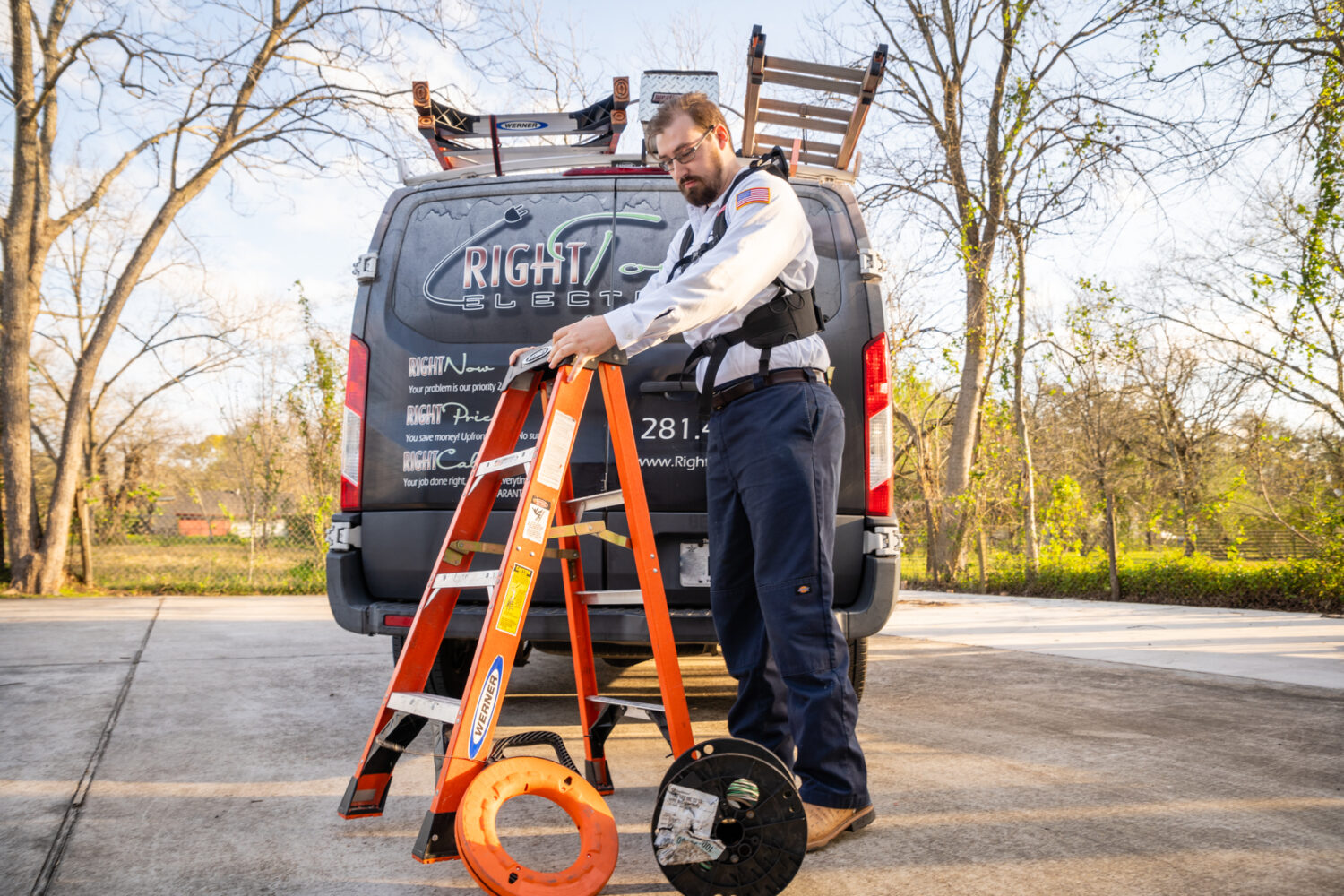
Electrician from Right Touch Electrical standing outside his van preparing to enter a Houston area home.

We hope these electrical tips have helped you prepare your home for the colder months. If you’re looking for an electrician or need additional assistance with seasonal preparations, get in touch with our team at Right Touch Electrical in Houston. We offer home rewiring, panel upgrades, electrical installation, repairs and emergency service. We look forward to helping you with all of your home electrical needs.


Filed Under: Blog

Common Electrical Problems During Winter

Electricity is a necessity in the modern household. This is especially true when the weather cools down. Unfortunately, many homes experience problems with their electricity in the winter months. You want your family to be safe and comfortable, so check out this guide on how to deal with the 12 most common electrical problems during winter.

Why Electrical Issues Are a Big Deal

Without reliable electricity, you can’t keep the lights on, cook, refrigerate your food, charge your phone, or accomplish any important tasks. To make matters worse, electrical problems can be extremely dangerous. Electrical wires contain enough voltage to stop a person’s heart, and home electrical fires cause around 500 deaths per year in the United States. Because electricity is so deadly, you must act quickly when you notice an electrical issue.

Common Electrical Problems

Power Outages

Wind and heavy rain can knock branches onto a power line and cut off your home’s electricity, so you should make sure that all power lines on your property are clear of limbs and other obstructions. If an at-risk power line is not on your property, then you can call your city to take care of it. Energy companies can only respond to an outage if they’re aware of it, so you should contact your electricity provider as soon as the power goes off for the quickest response.

Tripped Breakers

Breakers typically trip when there is a power surge somewhere in your home. Without functioning breakers, excess electricity would course through your house, fry electronics, and possibly start a fire. In some cases, a tripped breaker may indicate that your home’s wiring is faulty.

Each breaker should have a label that clearly designates the location of its circuit, so you should pay attention to which breakers trip often and share this information with a reliable electrician if you keep having problems. Breakers also tend to trip when you use too many electrical devices in one area in your home. This is especially common when you connect space heaters and other appliances to a single power strip, so spreading out space heaters, appliances, and other devices more evenly across your home may prevent breakers from frequently tripping.

Dead Light Bulbs

If multiple light bulbs are burning out in your home, then you could have a wiring problem or a buildup of moisture around your fixtures. Drastic changes in temperature cause condensation, which can damage light fixtures over time. Moreover, constant breaker trips will send excess electricity through your light fixtures and damage light bulbs. If the light bulbs in a single fixture are constantly going out, then you may simply have a faulty light fixture. In any case, a good electrician in Houston will repair your light fixtures and perform any necessary maintenance on your electrical system to keep the lights on.

Damaged Wiring

Sometimes, the protective material over a wire can wear down or become damaged and expose the wire. An exposed wire can start a fire or give someone a deadly shock. With that in mind, you should repair or throw away any devices or power strips with damaged plugs, sockets, or wires. While bad wires on your devices are immediately visible, many of the wires in your home are hidden behind walls, making damage difficult to detect.

Nonetheless, you can still notice signs of damage if you have a keen eye. Discolored spots in your walls and ceilings often signal a problem with your wiring. When wires are exposed, they can send electricity through the nearest wall, which transfers heat and singes the surrounding area. This is a massive fire hazard, so you must reach out to a professional to deal with the problem as soon as you notice it.

Malfunctioning Outlets

Dead or sparking outlets aren’t just inconvenient, but they can also be very dangerous. A bad outlet can easily shock someone or start a fire. On top of that, a faulty outlet puts everything else in the same circuit at risk of electrical damage. Outlets usually malfunction due to faulty wiring, physical damage, or power surges. An outlet can become faulty at any time, so you should keep appliances and furniture at least a few inches away from them to minimize the risk of an electrical fire. Ideally, outlets should also be plainly visible so that you can easily notice any smoking, sparks, or discoloration.

Damp Wires and Fixtures

In many cases, discolored walls are the result of water damage. Water damage won’t only lead to mold and compromise the integrity of your home, but it can also cause short circuits and electrical fires. Heavy wind and rain damage your roof and cause leaks. On top of that, bad weather will slowly wear away the soil around your home’s foundation and allow water to seep into your basement. If you notice musty smells, dampness, brown stains in your walls and ceilings, then you should call a reliable contractor immediately to prevent the problem from getting worse. You might also need the help of an electrician if there’s any evidence of excess moisture around your wiring or electrical fixtures.

Static Electricity

The winter months are often dry, and dry conditions can cause a lot of static electricity to build up. Static electricity is mostly just a nuisance, but a fire can break out if an electrical charge goes off near flammable materials. Static electricity is more likely to build up in homes with many carpets, rugs, and upholstered pieces of furniture. To avoid getting shocked or starting a fire, you may want to set up humidifiers in the driest parts of your home.

Dead Appliances

Grounded outlets allow excess electricity to escape appliances without causing any damage. Without proper grounding, power surges, outages, and other electrical problems can start fires, shock people, and fry whatever you plug into them. Unfortunately, older homes often have ungrounded outlets, but a good electrician can fix this by replacing outdated outlets with modern ones. Replacing fried appliances can be costly, and you don’t want a fire to break out, so it’s a good idea to replace ungrounded outlets as soon as possible.

Bad Space Heaters

Space heaters might be a decent way to warm up a room, but they can cause a ton of electrical problems. Because space heaters take a lot of power to function, they’re prone to tripping breakers. This is especially common in rooms that where a bunch of devices or appliances are already running. Cheaper space heaters are more likely to malfunction and set something on fire.

Even high-quality electric space heaters are fairly inefficient and can greatly increase your electricity bill. With that in mind, you should insulate cold areas and explore other ways to heat chilly rooms before purchasing an electric space heater. If a space heater is your only option, then you must only use one when you’re awake and in the same room as it. They’re just too dangerous to leave unattended.

Odd Sounds and Odors

Do you often hear an annoying buzzing noise but don’t know where it’s coming from? Does a certain room often smell like smoke, hot metal, or burning plastic? If you notice any strange sounds and smells but can’t find an immediate cause, then there’s a good chance that a hidden wire is damaged. Electricity generates a lot of heat as it arcs between frayed wires and surrounding objects. There is a high risk of fire when wires are damaged to the point of buzzing and burning, so you must hire an electrician to diagnose and fix the problem before it’s too late.

Generator Hazards

Many households have generators to keep lights and vital electrical appliances on during power outages. Although generators can be integral to your family’s comfort and safety when the power’s out, you must be very careful when using one. You should only run your generator outside. Otherwise, the people in your home will quickly die of carbon monoxide poisoning. Remember to keep your generator at least 20 feet away from your home, point the exhaust vent away from your home, and make sure that it’s not close to any flammable materials or obstructions. Do not operate a generator near open water or in rainy weather. If your generator is hot, emits a strange smell, makes an unusual noise, or runs abnormally in any way, then you need to immediately shut it off.

Dead Smoke Alarms and Carbon Monoxide Detectors

Smoke alarms and carbon monoxide detectors save countless lives every year, so it’s a good idea to have an electrician hardwire at least a couple of the alarms in your home. However, even if you have hardwired smoke alarms and carbon monoxide detectors, you should still test them monthly and regularly replace the batteries. After all, these alarm systems wear down over time, and they need fresh batteries to work in case of a power outage.

What To Do When You Have an Electrical Issue

Switch the Main Circuit Breaker Off

You should be able to find the main breaker in a metal box somewhere on one of the walls of the lowest level in your home. The main breaker is usually larger than the other breakers, and the inside of your breaker box should contain a diagram labeling each breaker. By switching it off, you will cut off the flow of electricity to your home. Switching your other breakers will simply cut off power to their respective circuits. Before you switch a breaker off, you should shut down any computers and smart appliances on the circuit.

Investigate the Cause

An electrician can fix the problem quickly if they know what to expect. Therefore, you should take note of all aspects of the issue. Relevant details to discuss with the electrician include the location of the problem, any strange sounds or smells, malfunctioning appliances, how long the problem has been going on, discoloration, frayed wires, dead outlets, electrical arcs, and anything else that might come to mind.

Take Your Family Somewhere Else

Once you notice an electrical problem, you must turn off the electricity in your home until a professional can deal with it. It can take several hours or days for an expert to fix your issue, but your family can’t live without electricity for that long. Thus, to keep everyone in your family safe, you should find accommodations for at least a few days while you wait for the electrician to finish the job.

Stay Safe This Winter

Winter weather can wreak havoc on your electrical systems and cause a ton of issues in your home. However, as long as you make proactive decisions and understand the dangers of electricity, your family will be safe. Only an expert can fix an electrical issue, so you should reach out to Right Touch Electrical as soon as you notice a problem for timely and professional electrical installation, maintenance, and repairs.

Electrical Problems During Winter

Call a Licensed Professional Immediately

Although an electrical problem may seem insignificant, it can eventually result in a deadly accident. You may be tempted to fix the issue on your own, but electricity can kill you in an instant. Only an experienced professional can conduct electrical installation, maintenance, and repairs. On top of that, if there are any signs that a layperson has worked on your wiring, then your home insurance provider may have grounds to cancel your policy, and most professionals will refuse to do any work on your property.

Filed Under: Blog

Signs You Need New Electric Wiring

In a typical home, electrical wiring can easily last more than 50 years. The copper wires used in electrical systems can last for up to 100 years. Unfortunately, these figures are only true when your electrical wires are properly maintained in a pristine environment.

Houston’s humidity and heat can damage your electrical wires over time. In addition, aluminum wires are known for becoming loose and causing fires. If your home was built before 1970, it may still contain these aluminum wires.

A little electrical troubleshooting can help you figure out if your home needs to be updated. By learning what to look for, you can determine where your electrical issue is. You can also reach out to one of the top electricians in Houston if you need help diagnosing and repairing the issue.

What Are the Signs I Need to Update My Electrical Wires?

On average, there are about 346,800 house fires each year in the United States. Unfortunately, electrical problems are one of the biggest causes of these fires. If you want to keep your home and family safe, you should start by looking at your fuse box or breaker panel. There should be a sticker that shows when the last inspection occurred.

In general, the Consumer Product Safety Commission says that a professional should inspect your home every 10 years. Unfortunately, most municipalities only expect home safety inspections if you are doing a major renovation. If you have not had an inspection for a long time, one of the following problems is an indication that your electrical wiring needs to be repaired soon.

1. Your Outlet or Switch Plate Feels Hot

Most likely, your home has toasters and other appliances that produce heat. While these appliances are supposed to warm up, the switch plate and electrical outlet should never become hot. If you notice the outlet is becoming uncomfortably hot, you should unplug the appliance and try a different outlet. You should also check the original outlet again. If the original outlet is hot without anything plugged into it, it could be a sign that the outlet was not wired properly. Until an electrician can troubleshoot the problem, you may need to flip the breaker to prevent the outlet from causing a fire.

2. Your Bathroom or Kitchen Has the Wrong Outlets

Another common problem with electrical wiring can be found in your kitchen or bathroom. These rooms are known for having high humidity and water. Because of this, they should be outfitted with ground fault circuit interrupters (GFCIs).

Basically, GFCIs provide electrical grounding and shock protection. These outlets will come with two little buttons in the middle. If your bathroom and kitchen outlets look like the ones in your bedroom, they need to be updated. Once you update the outlet, it will have extra shock protection that will keep it safe whenever water is present.

3. Your Lights Keep Flickering and Dimming

A standard light fixture only draws a small amount of power. Because of this, flickering lights are generally not because of an issue with the actual light fixture. Instead, this problem tends to occur when a space heater or big appliance is connected to the same circuit. For instance, a washing machine requires a significant amount of power to heat water. Each time you run your washing machine, it draws current away from your light fixtures. As a result, you may need to install a dedicated line for your big appliances or change your lights to another circuit.

4. You Have Too Many Extension Cords

While extension cords can be extremely useful, they can also cause problems in the long run. Your electrical wires are placed inside your walls for added protection. If they are installed properly, they can last for up to 100 years.

When you use extension cords instead of standard outlets, you cannot enjoy this added protection and longevity. The cord can kink or become damaged. You or your loved ones may also end up tripping on it. In addition, your home can develop damaged outlets and tripped breakers. While you may need extension cords every once in a while, you should avoid using them all of the time. If you do require them on a frequent basis, you should hire electricians in Houston to install more outlets instead.

5. Something Is Causing Sparks

Sparks are never a good indication. The location of the sparks will determine how large the problem is. If it is coming from an appliance, you may need the appliance repaired or replaced. Meanwhile, sparks from a fuse box, breaker panel, or outlet will be repaired differently.

6. You Hear Buzzing

When everything is running properly in your home, you should not be able to hear your electricity. If there is a problem, you might hear a buzzing sound. This can happen because of loose prongs, broken outlets, or frayed wires. If you can tell where the sound is coming from, you should stop using that outlet. Afterward, you should call electricians in Houston for help.

7. You Smell a Funny Odor

Sometimes, appliances will release weird smells when they are initially turned on. This is generally not an issue. If you have had an appliance for a while, it should no longer make weird odors. You should immediately stop using any appliance that is making an odd scent. Likewise, you should immediately call an electrician if your breaker panel or fuse box is making an unusual odor.

8. Your Home Has Old or Aluminum Wires

If your home was produced between 1965 and 1973, it was most likely made with aluminum wires. These wires are known for causing house wires. As soon as you discover aluminum wiring, you need to call an electrician to rewire your entire home as soon as possible.

Old wiring can also lead to problems. If your property is at least 50 years old, your electrical wiring most likely needs to be updated. Old wiring and similar electrical problems cause around 10 percent of house fires.

9. You Keep Tripping Breakers

When your fuse or circuit breaker is overloaded, it will stop working. For instance, using a vacuum cleaner can trip the breaker. If the breaker is tripped because of an appliance, you do not need to worry. When you keep blowing the same fuse over and over again without an obvious cause, there may be a different circuit at fault.

10. You Notice Smoke, Scorched Material, or Discoloration

To keep your family safe, you should pay attention to your electrical outlets. If the outlet is discolored or has scorch marks, something is damaged. Smoke, scorch marks, and discoloration only happen when heat is present, so these are all indications that something dangerous is going on.

When Should I Update My Wiring?

It is important to get regular home safety inspections. While old wiring is more likely to be dangerous, new wiring is not immune to becoming damaged. Anytime wires become worn, corroded, damaged, or cracked, they can become a fire hazard. If you notice these issues, you should update the electrical wiring in your home. Likewise, you should look for frayed cords, loose connections, damaged wire insulation, overheated cords, and damaged appliances.

Why Do I Need to Update My Electrical Systems If Everything Works?

Even when your electrical wires are damaged, they may still continue to function. For example, damaged wires may overheat whenever they are used. While you can still get electricity to run your appliances, these electrical wires could start a fire.

Old homes are more likely to need updates. If your home was built before the 1940s, it has a type of wiring system that ran through the building’s frame. At the time, electricians would wrap ungrounded wires in electrical tape. In addition, your home may use rubber insulation if it was built before 1960. This kind of insulation tends to flake over time, which can lead to fire hazards.

What Happens During Home Safety Inspections?

After you reach out to electricians in Houston, they can come to your home and perform home safety inspections. If you have already noticed signs of a problem, they can also conduct electrical troubleshooting. In general, electricians can help through service inspections, basic electrical inspections, and final inspections.

A basic inspection is when the electrician checks your conduits, wires, and electrical panels. They will make sure everything is intact. Often, this inspection happens while the electrical wiring is getting installed.

A service inspection is when a licensed inspector checks the panel or other electrical systems. They are trying to determine if the panel is correctly installed. If there is a problem with the electrical grounding, it could become dangerous.

During a final inspection, the inspector is trying to determine if your electrical system is working properly. They may conduct trial runs to see how everything works. If there is an issue, they will recommend the best way to fix it.

On occasion, you may also hire electricians in Houston for routine inspections. In general, you should get your electrical wires inspected every decade. During this process, the electrician will look for signs of a problem and recommend the best course of action.

Get New Electrical Wiring Today

If you have noticed problems with your electrical grounding, outlets, or breakers, help is available. The right electricians in Houston can help you with electrical troubleshooting and routine inspections. To learn more about our services, call Right Touch Electrical today.

Filed Under: Blog

How To Choose A New Circuit Panel

electrician installing a new circuit panel

Your home gets a little older every day, and while you may have no trouble keeping up with the need to repaint or do other routine maintenance, you may not be quite as in tune with the need to perform upgrades on home systems. The plumbing, electrical, and HVAC in your home will eventually need to be replaced, and one of the key parts of the electrical system is the circuit breaker panel.

What is the Circuit Panel?

Your connection to the power grid is a single, large cable. It starts at the main power line through your neighborhood and connects to your house at the meter with an overhead line called a service drop or, in some cases, a buried service line.

This large line passes through the power meter where your consumption is measured and then goes into the house to the circuit breaker panel. The panel then turns that single wire into a series of wires that run all through your house. Each of those wires powers a circuit that provides power to any of a number of things. A circuit may go just to your range, your water heater, or simply to all the light fixtures and receptacles in a room or two.

The “breaker” part of the name comes from a device that is used to protect your home and its electrical items. The circuit breaker has two functions. First, it can disconnect power from a circuit so that you can make repairs, install equipment, or perform other work safely. Second, it can disconnect the power from a circuit automatically if the circuit is trying to pull too much electricity. This is a safety feature that helps prevent damage to electrical components and can save lives by preventing fires and reducing the risk of electrical shock.

The circuit breakers all live inside the panel, which is a large, metal box mounted on the wall. In addition to the individual breakers, most panels also have a main shutoff that will cut power to the entire house.

When Should You Replace a Circuit Panel?

There are several conditions that suggest or require that you have a new circuit breaker panel installed. If you’re unsure whether you meet one or more of these conditions, talk to a licensed electrician about how to decide if it’s necessary to look into electrical panel replacement, and about having that same electrician install the new one.

Here’s a look at why a panel may need to be replaced.


Code Requirements

Some homes have very old panels that date back to the day of the old screw-in fuses. These configurations are very unsafe and should be replaced immediately with a modern unit that utilizes breakers instead of fuses. No matter how well your panel appears to be performing, local codes will make the decision for you.

Safety Concerns

Breakers that frequently trip, even with little or no load on them, may be failing and should be replaced. It may be difficult to determine exactly what the problem is, making electrical panel repair a less realistic option. Often the problem lies with the panel itself, not the breakers, so this is a situation where your only durable solution is to replace the entire electrical panel and the breakers in it.

Panel Age

Like anything else, electrical panels eventually just wear out. After 25 or 30 years of handling high voltage, your panel’s internal components will be ready for an upgrade. Determine the age of your panel so that you will know when you should be thinking about a new one.

electricians measuring the size and installing the new circuit panelDetermining the Right Size for Your Circuit Panel
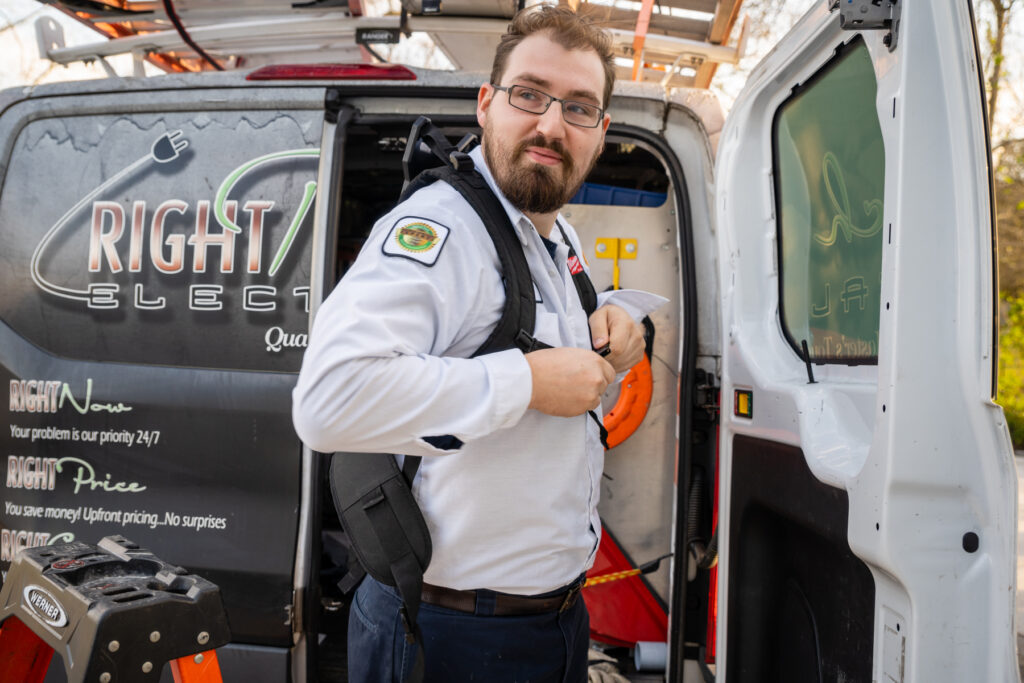

There are a number of different panel sizes. To choose the right one for your home, you should take a number of variables into consideration.

Balance of Utilities

Residential panels are available in amperage ratings including 100, 200, 225, and 400. For an all-electrical home, you’ll need space in the panel for an electric water heater, furnace, and range. On the other hand, a smaller panel will be enough for a home that operates some or all of these systems with gas. The more of your home you power with electricity, the larger the panel you will need.

Types of Systems Present

Not every home has the same items in use. Some homeowners may have a very advanced garage with heavy tools like welders. In colder parts of the country, a home may not have been built with air conditioning, leaving it with a panel too small to support one that’s added later. With the growing popularity of electric cars, some people may need to provide enough space in the panel for that power as well. Take a full inventory of current and future needs before choosing a panel size.

Home Value

If the possibility of selling the home is in your mind, always favor an upgrade to a heavier panel. For starters, potential buyers want to see that the electrical panel has been replaced, but they’ll also be interested to see that it has the capacity to expand for their needs once they move in.

Selecting a Circuit Breaker Panel Type

Depending on the location of your electrical service and the additional features your home includes, you have a number of different options for the new circuit breaker panel you have installed in your home.

Main Breaker Panels

As we mentioned earlier, many panels have a main cutoff breaker. This is a large switch at the top of the panel that turns off power to the entire building. It is often used in case of fire or a water leak so that the home can be de-energized while the problem is repaired. Routine electrical work will not require the use of the main cutoff unless the electrician cannot determine which circuits are involved.

Main breaker panels must be located within ten feet of where the power enters the home, so if your outdoor service connection is not close to the most convenient location for your electrical panel, you will not be able to use a main breaker panel.

Main Lug Panels

In cases where you need to put the main panel somewhere further from the service, a main lug panel can be installed. It includes all the normal breakers that a main breaker panel has except for the main cutoff that shuts down power to the whole house. That function is put into a separate cutoff switch.

The advantage of this type of panel is that the cutoff can be located somewhere that is fast and easy for firefighters to locate in an emergency. Many modular and mobile homes have the cutoff on the pole with the service drop from the main power line, making it very easy to de-energize the structure during a fire.

Sub Panels

Many homeowners have secondary areas that are best served with their own panel as an offshoot of the main panel. For example, you may have a garage where you operate heavy tools and equipment. These and other appliances may frequently trip breakers during the hard work that they do, and if their breakers are all the way back at the main panel, it’s time-consuming to go back and reset after correcting the overload.

It’s also easier to wire separate structures through a sub panel. Your electrician simply runs one large wire from the main panel out to the garage, workshop, greenhouse, or whatever you may have. From there, the sub panel distributes the power within the other structure.

Transfer Switches

Backup generators are becoming very popular. Whether they’re due to hurricanes or routine thunderstorms, power outages can cost you a lot of money in lost food as well as posing a health hazard if anyone in the home relies on an oxygen machine or simply cannot be without air conditioning.

Circuit breaker panels with transfer switches have specialized circuitry that detects the loss of outside power and activates the generator so that you have a near-seamless supply of electricity. This will keep the home comfortable and safe for its occupants. This type of breaker panel can be a good choice even if you don’t have a generator yet.

Working with a Licensed Electrician

As you can see, the process of choosing a new circuit breaker panel is not a single decision. There are a number of decisions that must be made before you can identify the best panel for your needs.

That’s where a licensed electrician comes into the process. With the guidance of an experienced and qualified person, you’ll be able to provide the information needed to narrow down the exact type of circuit breaker panel that will work best for you. With that expert help, you will not only have the right equipment for your needs but also a capable person to install it correctly, safely, and effectively.

electrician from right touch electrical strapping on his vest to get to work on a home in houston.

Need an Electrical Contractor? Contact Right Touch Electrical

Right Touch Electrical is your go-to business when you need to hire an electrical company. We prioritize quality and safety while finding balance to give you a fair price. Call today for a consultation.

Filed Under: Blog

  • 1
  • 2
  • Next Page »

Contact Us

Your Name(Required)
Preferred Contact Method(Required)
Messaging & SMS Policy(Required)
By submitting this form and signing up for texts, you consent to receive customer care and marketing messages from Right Touch Electrical at the number provided, including messages sent by an autodialer. Consent is not a condition of purchase. Msg & data rates may apply. Msg frequency varies. Unsubscribe at any time by replying STOP or clicking the unsubscribe link (where available). Reply HELP for help. View Our Privacy Policy

Contact Us

Houston Office:
5850 San Felipe St Suite 500
Houston, TX 77057

Pasadena Office:
2623 Dupont St.
Pasadena, TX 77503

Phone: (281) 407-6199
Right Touch Electrical Logo
  • Facebook
  • LinkedIn
  • YouTube

Our Services

Emergency Electrical Services
Panel Replacements
Meter Can Replacement
Troubleshooting
Circuit Repair
Lightning Strikes
Fuse & Circuit Breakers
Electrical Grounding
Electrical Outlets
House Rewiring

About Us

Our Company
Core Values
Service Areas
Contact Us

Copyright © 2026 · Right Touch Electrical · TMEL# 289765 · TECL# 29733 · Privacy Policy